This post has been in draft form for over a week, and it's starting to get stale. So I figure I'd better post it before it's completely obsolete.
Part 1 described how Time magazine presented a surprisingly progressive view of gay teens. In Part 2, I review (briefly) the surprises of the next three issues.
The issue after Gay Teens contains a cover story featuring alternative medicine guru Dr. Andrew Weil on Living Healthier Longer. It's not the first time Time has featured him on the cover, and it's a pretty generic story, but still it makes Time look more like Alternative Medicine than the bland corporate magazine it has always been.
The next issue (October 24, 2005), which features a cover hagiography on Steve Jobs, also contains a well-balanced article on the fluoridation debate, the first such article I've seen in a mainstream magazine to actually present both sides of the argument with open-minded respect. Remember when fluoridation opponents were generally branded as sociopathic kooks?
The same issue contains some amazingly forward-thinking prognostications about the future from superstar futurists like Esther Dyson and Malcolm Gladwell. Most notable, for me, is the discussion with tech publisher Tim O'Reilly about the "collective intelligence" of the web (what he refers to elsewhere as the architecture of participation). This includes such user-created databases as Wikipedia, a massive online encyclopedia which anyone can add to or edit.
I have a little bit of experience with this particular site, having contributed in small ways wherever I've found a hole. For instance, after my recent reminiscence about Ormond McGill, I checked over at Wikipedia and found (to my surprise) that there was no entry on this legendary hypnotist. I promptly added a brief entry, and also added him to the Deaths in October, 2005 page under "October 19th." I also sent this information to Ormond's closest colleagues with the invitation to modify or expand the entry as they saw fit.
The Architecture of Participation, the structure of the Internet that allows millions of people all over the world to contribute to the ever-growing database of human knowledge, is only beginning to reveal itself. How progressive of Time to give such a concept even a little bit of room in its pages!
But nothing could have prepared me for the cover story of the October 31, 2005 issue. The headline is The Great Retirement Ripoff, and it has the subheading: Millions of Americans who think they will retire with benefits are in for a NASTY SURPRISE. How corporations are picking people's pockets--with the help of Congress. Hello! When's the last time you saw Time magazine take a specifically anti-corporate and anti-government position? Beautiful! And that's the cover; you don't even need to read the article to get the message of the story. "Picking people's pockets" -- that's a crime! Time is accusing big corporations and Congress of engaging in quasi-legal but nevertheless criminal behavior! Is this Time or Mother Jones?
I can't prove this (and I'm unwilling to go digging to do so), but I believe that, oh, five years ago this story would have looked something like this: "Is Your Nest Egg Safe? How bottom-line pressures may be jepardizing your retirement benefits." In other words, a nice alarmist story about economic pressures and a changing world rather than a hard-hitting indictment of corporate greed and Congressional malfeasance.
What changed? The Web. Blogs. Free Speech. Time is a follower, not a leader, but at least it now looks like the leader they are following may just be the truth.
Saturday, November 05, 2005


On Stooges, Camera Tricks, and Strong Magic
In a comment to my last post, Mike from The Wizards Ball remarked:
The key difference with [Cyril's] tricks and the Angel window stunt (and his levitations) is that half the spectators are not stooges. To my mind that is really lazy magic.
Notwithstanding the fact that, to my eyes and experience, almost none of the spectators in the Angel video are stooges (or need to be), I have to take issue with Mike's general point. I used to parrot the standard magical purist line, that using stooges is somehow "cheating," or "lazy magic." A related viewpoint with regards to magic on television, is that the use of camera tricks -- or what has euphemistically been referred to as "creative editing" -- is unacceptable to "real magicians."
I have now come to understand that all magic is cheating; in fact, a pretty good definition of the magical arts (with apologies to Darwin Ortiz), would be the judicious and subtle use of cheating to create the illusion of impossibility. If you're a magician, cheating is your job! Assuming you accept that premise (and if you don't you're going to have trouble with that "illusion of impossibility" thing), it becomes obviously silly to try to make some determination about what is and is not acceptable cheating.
As far as I'm concerned, anything is permissible as long as it helps create the illusion of impossibility. Camera trickery, stooges, an entire fake set -- everything is okay as long as it contributes to the power and believability of the illusion. The great mentalist Ted Annemann once said (I'm paraphrasing), "If you need to use nine stooges to fool a tenth person, then go right ahead."
"But," he added, "it had better be one hell of a trick."
This brings up a more serious concern with the use of stooges and creative editing; there is an increasing risk that your audience will catch on and cease to trust you. Ironically, even though they know you are cheating to create the illusion, if they catch you, or even suspect you, you're dead in the water as far as your effectiveness goes.
The risk that my audience might lose faith in me is one reason why I never use camera trickery; the other reason is that I never perform on TV.
Friday, November 04, 2005
Cyril Slays Again!
You might remember the crazy hamburger trick I posted about back in July. The magician's name is Cyril Takayama, and he's a former L.A. kid, F.I.S.M. winner, and member of Magic X Live who moved to Japan and became a star. Here are a couple of other killer routines, and one certifiable stunner.
Cyril dresses like an old man and loses his head.
Cyril does something very cool with chopsticks.
And now, one of the craziest magic routines I've ever seen, a series of penetrations involving a glass table.
I have absolutely no idea...
-----------------------------------
Thanks to John B. for that last one.
Thursday, November 03, 2005
Criss Angel Window Stunner
 Criss Angel is a hot goth magician with his own series of specials on A&E. The magic blogosphere is full of ignorant naysayers who bash Angel right and left (many magicians bashed Blaine, too), but I think he's got real talent. He actually comes across as a sweet guy, too. I've seen only one of his specials (the one in which he zaps himself with a giant Tesla Coil), but to my mind he shows a lot of promise.
Whatever you think of him, however, this clip is pretty cool.
I think Angel is riding the coattails of David Blaine just a bit too much, but at least he's hip and sexy -- two qualities not often associated with magicians. Also, I heard him on Loveline the other day and he seemed intelligent and down to earth, too.
Magic needs more superstars and I'm rooting for Criss.
----------------------------------
Tip O' the Hat to Russell for the link.
Wednesday, November 02, 2005
Google AdSense
You may have noticed the Google AdSense ads to the right. In theory, if you click on any of the ads it sends some minor sum of money into my Google AdSense account. Bloggers with large readerships can apparently do pretty well with this program.
I signed up a while ago, mainly because I was interested in seeing what came up. I'm obviously not trying to make any money off of them (I don't even remember my login for their home page, or where it is) and I'd be quite shocked if they sent me a check even for fifty cents. But it is amusing to watch the ads customize themselves according to the content of my posts. I'm sure for "single issue" blogs this could be a very effective way to reach customers. If I were the leading blogger about bicycle technology, bike manufactures would wet themselves to reach my readers' eyeballs.
What's brilliant about Google's system is that the blogger himself does nothing but sign up. Once you've put the Google source code into your template Google's automated system does the rest. The advertiser pays only for clickthroughs, so it costs them nothing to have the ad up on my blog -- or anyone else's, for that matter -- unless they get a response. This is what enables a small company (a custom bike manufacturer, for instance) to get closely targeted results for very little money; like much of the Web, it helps level the playing field considerably.
With my blog, the ads range from magic themed to (now) gay-targeted ads. I'm sure by the time you read this there will be a bunch of hypnosis-related ads in their place. The power of the web to target both ads and information is being harnessed by Google like never before; it costs them virtually nothing to place an ad in every single location where it might be relevant. Since they only get paid if the ad gets a response, they have a huge incentive to continually improve their algorithms to increase their effectiveness. The benefit to you, the consumer, is that you don't have to read through a whole bunch of ads for products and services of no interest to you.
Maybe that's why Google is now trading, as of this writing, at $379/share. I read somewhere recently that uber-VC (venture capitalist) John Doerr invested $12.5 million of startup capital into Google, for which he received the pre-IPO equivalent of about 25,000,000 shares (at a then-theoretical price of 50 cents a share). I don't know if these numbers are exactly accurate, but if they're even close then Doerr (who previously invested in Amazon, Netscape, Sun Microsystems, Compac, Genentech, and just about every other major tech-related company of the last decade), with $12.5 million times roughly 760, is doing just fine.
And Google, by figuring out how to harness the extraordinary architecture of participation engendered by the web, is in fact changing the world.
Tuesday, November 01, 2005
UPDATED: R.I.P. Ormond McGill
 After initially reconsidering, I have edited this post slightly.
Ormond McGill, the "Dean of American Hypnotists," has died. Born in 1913 in Palo Alto, California, Ormond (as everyone called him) became interested in magic as a kid (he's also pretty legendary in magic circles), taking up hypnosis in 1927 while still a teenager. He wrote the seminal Encyclopedia of Genuine Stage Hypnotism (the acknowleged Bible of stage hypnotism) in 1947, and continued to teach courses and lecture right up until a few weeks ago.
The Guardian has a nice appreciation here. Here's SF Gate's obit. And Palo Alto Online has an archived story about Ormond here, dating back to 1998, when Ormond was a youthful 85. I'm sure Ormond was the last living person who could claim to have had an ice cream cone at Palo Alto's Penninsula Creamery on the day it opened in 1923!

I saw Ormond a few times at the local magic meetings, where he just looked like a sweet old man trotted out for display, the local boy made good. So I was truly blessed to have heard him lecture on hypnosis to an audience of hypnotherapists about eight months ago. At the time I was totally unaware that he was also a skilled transpersonal hypnotherapist and mystic. He gave a beautiful and moving talk on hypnotherapy, it's uses and abuses, and the ways in which it could transform individuals and the world. The highlight, for me, was when he did a demonstration on a woman in the audience.
The woman told Ormond she was scared to drive on the highway; could he help her with that? Ormond took her through a very gentle induction and then talked her through her fears. I was struck by the softness of his demeanor, the kindness of his heart, and his casual but absolute mastery -- the result of seventy-five years of practice. I and the rest of the room felt totally at ease with this man; any one of us would have happily volunteered to be the object of his attention.
---------------------------------------------------
I've known a lot of hypnotists and hypnotherapists over the years, and a very high percentage of them have come across as egotistical, insecure buffoons (apologies to any healthy hypnotherapists reading this). In my experience, hypnotherapists you encounter socially are more apt to offer unsolicited help (at bargain rates) than any other type of therapists. The field of hypnotherapy is frequently associated with Neuro-Linguistic Programming (NLP), a quasi-scientific system that claims to be able to help people change by teaching them how to restructure their brain functions.
The Skeptic's Dictionary has an informative analysis of NLP which concludes:
It seems that NLP develops models which can't be verified, from which it develops techniques which may have nothing to do with either the models or the sources of the models. NLP makes claims about thinking and perception which do not seem to be supported by neuroscience... NLP itself proclaims that it is pragmatic in its approach: what matters is whether it works. However, how do you measure the claim "NLP works"? I don't know and I don't think NLPers know, either.
Just in case I haven't adequately communicated my discomfort with the cult-like aspects of NLP, here's a creepy 1989 Mother Jones article about megalomaniacal NLP cofounder Richard Bandler and the murder he may or may not have committed.
Because NLP emphasises self-hypnosis and behavior modification, it seems that many hypnotists either start out in NLP or pursue its study at some point in their careers. Hypnotism, like NLP, is an attractive field for those who like power (NLP-based systems for picking up women flower on the Net these days), and it frequently attracts those who have trouble making friends the old fashioned way -- through charm, intelligence, and shared passions.
----------------------------------------------------
What an honor it was, then, to watch a man with an abundance of all three. Ormond was sharp, smart, and sensitive and he brought an unexpected (to me) spiritual awareness to the proceedings. He was ninety-two at the time, but his teaching and lecturing schedule was quite filled up for months to come. His boundless energy and enthusiasm were an inspiration to everyone in the room.
After the lecture, I had the great pleasure of accompanying him and his friends to dinner, where several of us (magicians) entertained by performing magic for everyone. My friend and I even got to drive him home from San Jose; by sheer coincidence he lived four blocks from my work -- where my car was parked. What an honor is was to hang out with this guy, this legend who turned out to be better than the legend!
Ormond wrote somewhere between twenty-five and forty books (sources disagree on the total), including such titles as Grieve No More Beloved (about his afterlife contact with his deceased wife), Hypnotism and Mysticism in India, and his autobiography, The Amazing Life of Ormond McGill. A Google search on his name reveals 89,000 pages ("PeaceLove's Musings": 213).

Yes, the magic and hypnotism world has lost a giant. And a beautiful man, too.
Monday, October 31, 2005
More Gay Musings
Er, perhaps I should call this, PeaceLove's Musings on Gayness, lest you should read this and think, "That's so gay!" Here are a few more thoughts on homosexuality and culture that I really wanted to put into that last post but couldn't quite shoehorn in.
The expression above -- "That's so gay!" -- sounds for all the world like it should be derogatory towards homosexuals but I think it's not, at least not as it's generally used in popular culture. I hear it used a lot by young people I know are not homophobic or prejudiced. Hell, I've even heard it used by gays. It's worth unpacking the expression a bit, and I think what's going on is this:
Gay people are different, and not only because they sleep with people of the same sex. They are different because they come from a persecuted minority, because they are bound together by a commonality (sexuality) which remains largely taboo and hidden. In addition, many of them share a particular type of dysfunctional family background, especially if they grew up somewhere in America's "heartland."
The historically hidden aspects of gay culture mean that much of the gay presence in the mainstream culture has had to be communicated via a whole occult (hidden) language of signs and signifiers. I remember sitting in film classes with the late Gerald Mast, who was gay, and learning something of the visual language of gay Hollywood film. For instance, the director George Cukor was gay, and if you watch his classic comedies like Holiday (1938) and Adam's Rib (1949) with this in mind it becomes easy to spot the gay characters - Hepburn's brother Ned (Lew Ayres) in the former, Tracy and Hepburn's next door neighbor Kip (David Wayne) in the latter. Mast was fond of pointing out the signs, such as Kip's Buddha statue (a sign of gayness in the 1940s) and his line to Hepburn (who in the movie is married to Tracy), "You should marry me, Amanda. It'd be so convenient."
From Mast's class I began to realize that there's a whole language of homosexuality, hidden in plain sight within mainstream culture. This is not hidden in there with the intention of secretly converting heterosexual children to homosexuality (take note, fundamentalist gay-bashers), but rather as a way for gay people to communicate to other gay people that they're not alone. As the culture opened up, the avenues for gay expression opened up, too. Today, many of the most familiar signifiers are so well-known as to approach (or surpass) camp. In film and television, a man interested in musicals (especially involving Judy Garland or her daughter Liza Minelli) or the fashion industry is tagged (with some justification) as a gay character.
The Internet has opened the doors wide open; without the Net there would probably have been no Time cover story like the one I discussed previously. Given the well-established gay signifiers in the culture, the expression "That's so gay!" is simply an affectionate tease, expressing that the straight recipient of the comment is dressing or acting in a manner that overlaps a bit too heavily (for a straight person) with gay style and culture. I don't think there's any undercurrent in the comment that gayness is inherantly bad, only that it's unbecoming for a straight person to look or act gay.
Just the other evening on Loveline, a radio show with Adam Carolla and Dr. Drew, Adam had on his assistant Matt Haber (who is also his TV sidekick on The Adam Carolla Project). Haber is an openly gay young man, a sassy queen with a sharp sense of humor and a sweet spirit. It was refreshing to hear him discuss his sexuality and culture so openly, but it also amused me when Adam used the "That's so gay," line a few minutes later to a different person in a different context. I'm quite sure that Adam in no way meant to disrespect gay people; rather he was hitching a ride on a cultural idiom in a way only someone comfortable with gays ever could.
Years ago, a Canadian friend told me that she was perfectly comfortable making jokes about race with black friends of hers because "we don't have that whole slavery thing you Americans have, so we don't have to worry about being taken seriously when we joke." I believe something similar is happening with today's young people with regard to homosexuality. They are beginning to grow up in (and perpetuate) a world in which they can embrace gays and straights alike. Last year, when San Francisco Mayor Gavin Newsom opened the courthouse for gay marriages -- thus pushing the issue permanently into the forefront of our national consciousness -- I suggested to a twenty-four-year-old straight male friend that Newsom should get a Nobel Prize. I was extremely surprised and moved when he replied without any hesitation, "I think he's going to be President."
That had never really occurred to me as a possibility, since historically, standing up for gays has never been a path to political success. Perhaps times have changed. Maybe voters have changed.
Maybe, in this new world, a little joke about gays is just that: a joke.
Thursday, October 27, 2005
Time Delivers!
I don't normally read Time magazine because, well, why bother? But it's around at my work so I tend to skim through it on my downtime. I've been rather shocked--shocked!--at what I've seen over the last four issues.
What on earth could possibly have come over them? Four cover stories in a row I've read where they've actually taken extremely progressive stances, not necessarily in the most straightforward way, but quite specific nonetheless. This post will cover the first of the stories.
In The Battle Over Gay Teens, Time offers up an extraordinarily balanced view of what's going on with gay teens in America these days: how they're coming out earlier, how they're less scared to come out, how the Internet gives them a home no matter where they happen to live, how being anti-gay is beginning to be seen as uncool among the young, how 57% of teens favor gay marriage (compared to 36% of Americans overall). Of course, they also have the requisite right-wing primitives who decry the end of civilization as we know it, but for the most part the article is quite specific in humanizing its subjects -- and the undercurrent clearly communicates the notion that gays should be free to do whatever they want in a free society.
In short, if you read between the lines, Time is announcing to the country that the battle is over, that within a generation or so gays will be fully integrated into the culture.
I suppose I ought to add in my own two cents about just why I find this story so refreshing. It requires addressing what I call "liberal bias," which I've referred to elsewhere in the context of Hip Hop music. In reference to homosexuality, the standard liberal stance contains a paradox: most liberals will try to convince themselves that there's no difference between gays and straights while simultaneously praying that their own sons and daughters don't end up being gay (because "life as a homosexual is difficult," or some similar argument).
By contrast, the Time article cites a number of studies showing that almost ninety percent of gays would NOT choose to be straight even if they had the choice. In other words, there's obviously something specifically rewarding about being gay, such that a majority of gay people are apparently grateful for their orientation (I encourage comments from gay readers on this point).
This reminds me of a controversy covered by Atlantic Monthly some years back about a new procedure intended to give hearing to deaf people. The controversy centered around the fact that many deaf people (especially the "elite" of deaf people, deaf children of deaf parents) resented the notion that they were somehow "incomplete" without their hearing. Deaf people have their own language (American Sign Language is not simply a signed version of English) and culture; to be deaf is to be part of a whole community. Giving the deaf children of deaf parents hearing, the argument went, risked alienating them from their parents and culture.
I don't know what percentage of deaf people wish they could hear, but it's not safe to assume that all deaf people do, or even that they necessarily suffer the way you or I probably imagine we would suffer if we suddenly lost our hearing. Similarly, if it's wrong to assume that most gay people would jump at the chance to be straight, why should any parent care one way or the other if their child is anything other than happy?
I don't follow any particular religious path but my spirituality is very clear on the notion that God doesn't make mistakes, that everyone is here for a reason. If that's the case, then gay people are absolutely equivalent to straight people (not identical, equivalent), and it literally does not matter whether your children are gay or straight. The pseudo-Christian Right is forever lamenting the "normalizing" of homosexuality in our society, but their infernal battle is already lost. Raise the consiousness of the young and the "battle over gay marriage" will seem quaint in ten or twenty years.
Up next: Time delivers again, and again, and again!
Wednesday, October 19, 2005
A Scanner Darkly
I'm definitely waiting for King Kong, since Peter Jackson is on my all-time heroes list after Heavenly Creatures and the masterwork Lord of the Rings trilogy. Jackson has taken the revolutionary step of posting extensive info about the production online; check out the fascinating "production diaries" on the Kong is King website.
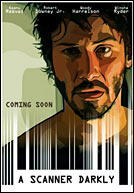 But my most-awaited pick is Richard Linklater's adaptation of Philip K. Dick's A Scanner Darkly. The trailer is a trip; they seem to have adapted the "digital rotoscoping" technology used so brilliantly in Linklater's astonishing Waking Life and added a whole reality-bending element.
Linklater has made a string of extraordinary films over the last ten years or so, including Before Sunrise, its nine-year follow-up Before Sunset, and the aforementioned Waking Life. He also has a pretty sharp commercial sensibility; School of Rock rose above its pedestrian Hollywood roots by combining Jack Black's sweetly manic performance with a keen sensitivity to the kids in the band. A Scanner Darkly looks to be another notch in his belt; even the Philip K. Dick Trust has high hopes for this one.
Linklater himself has a long cameo in Waking Life as a guy (himself?) telling a long story about Philip K. Dick, dreams, and time travel. He seems to be a director comfortable with serious investigations into the nature of consciousness, the contours of reality, and the netherworld between imagination, dreams, and the temporal and spatial consensus reality. In Linklater, Philip K. Dick may finally have found the director he's been posthumously seeking.
 But my most-awaited pick is Richard Linklater's adaptation of Philip K. Dick's A Scanner Darkly. The trailer is a trip; they seem to have adapted the "digital rotoscoping" technology used so brilliantly in Linklater's astonishing Waking Life and added a whole reality-bending element.
Linklater has made a string of extraordinary films over the last ten years or so, including Before Sunrise, its nine-year follow-up Before Sunset, and the aforementioned Waking Life. He also has a pretty sharp commercial sensibility; School of Rock rose above its pedestrian Hollywood roots by combining Jack Black's sweetly manic performance with a keen sensitivity to the kids in the band. A Scanner Darkly looks to be another notch in his belt; even the Philip K. Dick Trust has high hopes for this one.
Linklater himself has a long cameo in Waking Life as a guy (himself?) telling a long story about Philip K. Dick, dreams, and time travel. He seems to be a director comfortable with serious investigations into the nature of consciousness, the contours of reality, and the netherworld between imagination, dreams, and the temporal and spatial consensus reality. In Linklater, Philip K. Dick may finally have found the director he's been posthumously seeking.
Tuesday, October 18, 2005
On Connectedness, MySpace, and The Future
The single most important engine driving the popularity of MySpace is that it's free. Free to have a Profile, free to post pictures, free to have a personal blog, free to have a friends list, free, free, free. Free is the engine that has driven much of the Internet. If you like this blog and want your own, it's yours for the taking; blogs here on Blogger.com are free, too.
[Actually, the only person who had to pay anything for MySpace is Rupert Murdoch, whose Fox News Corp. just paid 580 million dollars for the company that owns MySpace. I guess Tom, the dorky-looking geek who started MySpace, and who adds himself as a "friend" to every new member's profile, won't have any problem getting dates from now on.]
Mention MySpace to the average adult and, if they've heard of it at all (I live in Silicon Valley where a disproportionate number of adults actually know about Internet trends), they usually dismiss it as "a big teenager thing." There is some truth to this, even in my own personal experience. Two of my three "friends" are the teenage daughter of a friend of mine and a friend of hers (the other is an early-twenties magician buddy).
I don't know the statistics, but any search without an age range will return far more 18-25 year-olds than 25-60 year-olds. Much of this probably has to do with the fact that teenagers have the skills and the time to mess around on MySpace; they don't have kids and mortgages to worry about. But I think something else is afoot as well.
The Internet Generation, which I have dubbed Gen I* is growing up with a sense of global connectivity unseen in the history of life on earth. They keep in touch with their friends as often as they desire, through their ever-present cell phones (via talk and text messaging) and through myriad channels on the Net. MySpace and the other social networking sites give them a place to homestead in cyberspace. Because everyone is connected to everyone else at all times on Myspace, it really does share an important quality with a village: everyone lives in your neighborhood.
In perusing various profiles on MySpace, I have been repeatedly struck by the level of personal detail people put out there for all to see. I'm not talking about sexual proclivities, or that sort of thing. But people have huge lists of their favorite bands, films, TV shows, drinks, sports, activities, and other passions. You can tell a lot about a person by the info they put out there, and it's clear the subjects of the profile want it that way.
For the moment, much of the activity on MySpace does seem somewhat infantile, but the kids who are growing up on this and similar sites will very soon be the adults of tomorrow. They will be used to having their own personal profile as an extension of themselves. I have already noticed how useful the web can be for finding out more about people I meet, especially in the context of where they work, since most companies have a web presence. How useful it would be to be able to pop over to my doctor or lawyer's MySpace profile to find out quickly how likely we are to be compatible (doctors who love hunting - no; lawyers who do pro bono work with the ACLU and listen to Radiohead -- much more likely).
It's hard to predict where social networking sites will be in five years, but I doubt they're going away anytime soon.
Note:
* [Damn. Gen I seems to be mine, but with Generation I Bill Gates seems to have beaten me to the punch by an embarrassing five years.]
Monday, October 17, 2005
The Simpsons: Origins

My continuing adventures with MySpace are a work in progress, but in the meantime here's a trip down my memory hole.
A few of my readers may remember that The Simpsons started out its life as a series of shorts on Fox's The Tracey Ullman Show way back in 1987. They were extra bits intended to get the show in and out of commercials, but they quickly developed a life of their own. I was already a huge fan of Simpsons creator Matt Groening's work, having developed a delirious passion for his his darkly plangent Life In Hell comic strip from reading it regularly in the Chicago Reader when I first moved to that fair city in 1982. I'm pretty sure I knew early on that Groening was the creator of the shorts; I may have even watched the show on that basis.
At any rate, I saw the first-ever short episodes of what later became The Simpsons on its premiere airing on April 19th, 1987. I remember well the refreshing bite of those quick snips; there was nothing like its satirical blend of family dysfunction, neurosis, and fear on television at that time. The first series, "Good Night," has stayed with me for the last seventeen years and from that single viewing years ago I can quote you almost verbatim the entire four-section mini-cartoon.
Now I've had the chance to check my memory. Those early episodes are available online for viewing here. They're as funny and sharp as I remember, if a bit rough around the edges. Popular culture has evolved and grown by leaps and bounds in the last eighteen years, and The Simpsons has been in the vanguard of that change. And Tracey Ullman, as part owner of The Simpsons, has become a very wealthy woman indeed.
Sunday, October 16, 2005
Next week's Time magazine (sigh)
Tip 'o the Hat to the folks for hipping me to this HUGE upcoming story...


Saturday, October 15, 2005
On MySpace and the Future
Wired News has a brief article about the job market for Futurists -- and the lack of any accountability or certification program for those self-professed prophets who purport to interpret the signs and advise businesses which way the wind will blow. I mention this because I think this would be a perfect gig for yours truly, since I love nothing more than to analyze kiddie trends and prognosticate about what will happen when said kids grow up to be the leaders and trendsetters of tomorrow.
...
[Sorry, I drifted off there for a moment while imagining my son running the World Bank, or Halliburton...]
At any rate, a few weeks ago I was sitting in the hot tub at my gym when I overheard a couple of young men (high-school seniors, I gathered) discussing one of their girlfriends. "Where did you meet her?" asked the first. "MySpace," replied the second, matter-of-factly. "Oh, cool," said the first, without much further thought.
Meeting a mate online is nothing new, but when most adults (people over thirty-five, say) describe such a meeting, they inevitably effect a tone somewhere between salaciousness and wonderment -- "He met her on the Internet" -- implying that this is still an exotic and perhaps not-entirely-savory way to meet someone. I was, therefore, particularly struck by the casual affect of the young man; he may as well have been describing a meeting in school, or at the mall.
MySpace is the hottest of the social networking sites on the web (other popular sites include Friendster and Orkut). Basically, these are sites where you can set up your own personal website, with pictures, music, links to your interests, passions, sexual preferences, favorite color, and anything else you'd like others to know about you. On MySpace, you also get your own MySpace blog linked to your Profile, as well as a linked email account and instant messenger.
Most importantly, everyone you know who's on the network can join your "friends" list, so it's easy to quickly acquire a large network of "friends," some of whom are no more than people who 1. have a profile you find interesting and 2. agree to accept your "friend request." Of course, all your friends become the friends of all your friends as well, and their friends' friends become friends of friends of friends...
The whole "Friends" network can get pretty big pretty fast, which is sort of the point. On MySpace, you can quickly feel that you're part of a larger community. Networks of friends can keep in touch about what's happening on The OC or where to find out about tattoos.
Built into the system is the power to peruse the massive database for potential romantic partners, too. MySpace allows you to do searches by zip code, marital status, gender, sexual orientation, and a variety of keywords. You can find all the 25-27 year-old slender/slim vegetarians within fifty miles of you who are into mountain biking, or Matisyahu (The Hassidic Reggae Superstar), or (all over MySpace) Adult Swim.
Now, this wasn't the first time MySpace had intruded into my consciousness, but the casual way these particular kids referenced the site was a major wakeup call for me. I chatted with them a bit about the site, and from the discussion it was clear to me that this site was a huge part of their lives. So I started paying attention to the MySpace meme, and once I started looking I found MySpace showing up wherever teenagers were prevelant.
The Next Big Thing is happening right now! I figured I'd better get right over there and investigate...
Up next: What I learned about MySpace, young people, and our future (Hint: it's brighter than you think)
Thursday, October 06, 2005
More on Shining
Wow! The New York Times did an article about Robert Ryang, the 25-year-old creator of the "Shining" trailer mentioned below. That's just so wild that a little project he put together and emailed to a few friends suddenly got him into the New York Times. He won a contest and...well, read it and you'll see.)
The power of the net to spread a good idea...damn.
[Sorry about the light posting schedule this week; I've been exploring MySpace. I'll tell you what I think very soon.]
The power of the net to spread a good idea...damn.
[Sorry about the light posting schedule this week; I've been exploring MySpace. I'll tell you what I think very soon.]
Thursday, September 29, 2005
UPDATED: New Comedy: The Shining
UPDATE: The new Harvey Danger CD I discuss below is fantastic; I urge you to go download it for free as soon as you're done reading this post. I've now listened to it five or six times and it reveals new pleasures with each listen -- while older pleasures gain in power and welcome.
It's cranked up on the headphones even as I write this.
-----------------------------------
Via Screenhead (and many others), here's the trailer for that heartwarming and wacky new comedy from Stanley Kubrick, The Shining.
Okay, for fans of The Shining, this is no kidding the funniest thing I've seen in a while.
And, as a bonus to my readers (and via BoingBoing), Seattle's Harvey Danger have put their entire new album Little by Little online for free download. I don't know much about the group, but I consider myself a fan just on the basis of their megahit song Flagpole Sitta', with it's punchy beat and bitingly intelligent lyrics:
been around the world and found
that only stupid people are breeding
the cretins cloning and feeding
and i don't even own a tv
paranoia paranoia
everybody's coming to get me
just say you never met me
i'm going underground with the moles
hear the voices in my head
i swear to god it sounds like they're snoring
but if you're bored then you're boring
the agony and the irony, they're killing me
Delicious! Little by Little is playing on the computer even as I type this, and it's a beauty. I have crappy little speakers here, but every song so far has been a winner; I look forward to getting this onto the iPod for a serious listen. Or two. Or ten.
Incidentally, if you like the album, Harvey Danger would like you to know that they'd appreciate if you would support them by buying it.
Wednesday, September 28, 2005
UPDATED: The Museum of the Hard-to-Believe
UPDATE: Doh! My buddy Greg left a comment here that Johnny has closed the Freakatorium (see below) and moved to Connecticut with his wife. I posted back in June that he was closing, but when I checked the Web site I saw nothing about it and I assumed that he had somehow managed to stay open (silly me, to assume people update their Web sites when they actually SHUT DOWN PERMANENTLY).
---------------------------------------------------------------

Kudos again to the Web, whose intricate and organic linking structure yielded the idea for this post, a journey into unusual museums.
BoingBoing has a fun post about Swordswallow.com, a neat repository of lore and info about sword swallowing. They even have an extensive list of contemporary sword swallowers, including Prague's own Emil Ondracek, (who I used to watch all the time during my own fabulist days in this most extraordinary city) and my old acquaintance Johnny Fox.
Johnny is also the owner/curator of the Freakatorium (El Museo Loco) in Manhattan, a direct descendent to the "Cabinets of Curiosities" that used to grace every major city worthy of the name. Johnny's amazing collection of oddities and freak-related memorabilia includes sideshow banners, Tom Thumb's clothes, P.T. Barnum's "Fiji Mermaid," and Sammy Davis Jr.'s glass eye. I haven't been to New York for about a decade and I have yet to visit the Freakatorium, but it's definitely on my short list of things to do when I make it back.
Thinking about the Czech Republic (which, for my less geography-centric readers, is in fact where Prague is located) reminded me of the jaw-dropping Sedlec Ossuary in the Czech town of Kutna Hora. This world-famous church is decorated with the bones of about 40,000 inhabitants of the cemetery that used to lie underneath it. Check out the coat of arms and the chandalier; this place is definitely worth a visit!


Mystery writer John Connelly has a lovely article about Sedlec; he was so taken with the place that he featured it in his latest book, The Black Angel.
And while you're in Kutna Hora, be sure to take a stroll over to the new Museum of Alchemy.
Another legendary museum I've not yet visited is the Mutter Museum, run by the College of Physicians of Philadelphia (which, for my really non-geography-centric readers, is in the eastern part of the United States, close to Colorado). From the site:
The Museum's collections include over 20,000 objects, including approximately 900 fluid-preserved anatomical and pathological specimens; 10,000+ medical instruments and apparati, primarily dating between 1750 and the present; ca. 400 anatomical and pathological models in plaster, wax, papier mache, and plastic; ca. 200 items of memorabilia of famous scientists and physicians; and ca. 1500 medical illustrations in the form of lantern slides, 35 mm. slides, photographs, drawings, and prints
The Mutter is most famous for it's "fluid-preserved anatomical and pathological specimens" (there's a fun description here), but they also have an excellent OB-GYN Instrument Collection, among other medical historical curiosities. Currently, they are running an exhibit on conjoined twins.
 I've saved the best for last. No visit to Los Angeles is complete without a visit to the Museum of Jurassic Technology (MJT), an educational institution dedicated to the advancement of knowledge and the public appreciation of the Lower Jurassic. MJT is a tough place to describe; it's a "cabinet of curiosities" in a similar vein to the Freakatorium and the Mutter, but it's also a meta-museum, a museum about museums. The exhibits at MJT are as much about the elusive nature of knowledge and the arbitrary construction of reality as they are about forgotten neurophysiologist Geoffery Sonnabend or the little-known megolaponera foetens, a stink-ant from Cameroon.
I first visited the Museum of Jurassic Technology about fifteen years ago, after reading about it in local artsy paper the L.A. Weekly. My friend Mark and I found the non-descript storefront on Venice Boulevard and wandered in. The proprietor, a soft-spoken simian-looking man named David Wilson greeted us calmly (the place was otherwise empty), took our money, and then suggested we start with the introductory movie.
From there things got strange and stayed that way. I'll not describe what we saw; best to visit yourself and find out. Deliriously gifted writer Lawrence Weschler was so taken with MJT that he wrote Mr. Wilson's Cabinet of Wonders, a loving examination of the museum and it's creator. Weschler also co-produced a beautiful Sound Portrait on MJT that's as good a place as any to start your own exploration.
Since my visit, David Wilson has won a MacArthur "genius grant" Fellowship, expanded the physical space considerably, and earned himself a devoted cult of followers. I consider the Museum of Jurassic Technology to be one of the great conceptual masterpieces of this century, and I urge everyone to check it out if you go to Los Angeles (which, as my more geography-centric readers well know, is an easy forty-five minutes southeast of Orlando, Florida).
--------------------------------------------------------
Special Honorary mention to the first reader who can identify the geeky pop-culture origin of this post's title.
Tuesday, September 20, 2005
Martha Stewart on Fur
I don't usually go for these short posts, but sometimes I get particularly inspired. Courtesy of PETA, Martha Stewart hosts a very grim but even-tempered five-minute informational film in which she renounces fur and describes (with plenty of supporting footage) where it comes from. Various methods of animal killing are shown; if you wear fur, you may want to reconsider after seeing this.
Quote of the Day
Insanity in individuals is something rare - but in groups, parties, nations and epochs, it is the rule. -Friedrich Nietzsche, philosopher (1844-1900)
Wednesday, September 14, 2005
UPDATED: New Orleans: A Cameraman's Diary
[See the UPDATE at the end.]
BoingBoing has a couple of extraordinary posts from a news cameraman (who chooses to remain anonymous) about the conditions on the ground in New Orleans. The first is from September 4th, the second just went up today (although it's dated September 9th).
From the earlier post:
There are almost no news crews in the field trying to cover the story. Hundreds, if not thousands of media people are in the region - but I have driven back and forth through some of the worst neighborhoods in the city and you don’t see them. You don’t see the National Guard…..you don’t see ANYONE, except for the poor unfortunate souls wandering the streets looking for food or water. Many of them are on their last legs; they are literally not long for this world. It is surreal; it’s like a zombie scene from Dawn of the Dead. It’s disgraceful that in our times, we are seeing the complete disintegration of our ability to care for our own.
This is a racist issue, there’s no other way to look at it. These are the poorest of the poor. The people left behind in New Orleans are there for one reason only; they had no means to remove themselves from the city. Everyone who could get out, got out.
In the September 9 post, the cameraman says:
The desperation and fear is so personal, I feel unworthy even witnessing such deep heartfelt pain. But it is everywhere and it is the same scene over and over - and there is nothing that anyone can say or do that will make it any better. Everyone here is suffering the loss of a relative or friend or home or a job. And it goes on for miles and miles and miles.
What is striking is the incredible toll Katrina has taken emotionally. We often tend to focus on the dollar amount, the material costs and time. It’s as though all of the emotion and suffering is compounded by the shear enormity of the disaster. It’s hard to put into words just how much pain is concentrated in this region. So many people have lost their homes, their possessions, and loved ones.
Then, in discussing the relief effort, the writer says:
The lack of a plan is still the big story. Who is in charge? What is going to be done first? What are the goals? Evacuation? No evacuation? The New Orleans Police Department is trying to rebuild itself, and the National Guard seems to be the most organized. But there are way too many cops from as far away as Reno driving around with shotguns and M-16’s.
This is like a giant summer camp for law enforcement. There are hundreds of black and whites, armored cars, assault vehicles, and lawmen carrying every type of firearm ever made. It’s as though every police chief in the country put 20 officers in 5 cars and sent them to New Orleans - on overtime.
Of course, many are helping, but some have no orders or task to complete. So they drive around all day taking pictures, and then they go and sleep in their cars with the engine running and the air conditioning on. They are sightseers with guns taking “happy snaps” to show to all the folks at home. Complete with long tales of how they saved New Orleans.
----------------------------------------------------------
And now, as a reward for reading this through, here's a joke to pass on (also from BoingBoing):
Q: What's George Bush's position on Roe v. Wade?
A: He really doesn't care how people get out of New Orleans.
----------------------------------------------------------
UPDATE: The third -- and apparently, final -- dispatch from the anonymous cameraman, dated September 13th, is available here. Thanks again, BoingBoing!
Monday, September 12, 2005
On Open Source and Employment
The open source movement seeks to eliminate proprietary software and replace it with programs in which anyone can access, modify, and improve the code. The Linux operating system and the Firefox browser (which I'm using right now) are two examples of highly successful open source projects. Both of these examples have user bases which are growing exponentially, since they (and many other open source programs) provide viable alternatives to the overpriced, frequently unstable software available from large, private software vendors.
One such private software company, a 900-pound gorilla named Microsoft, made the mistake of offering a job to one of the leading figures in the open source movement, hacker historian and coder Eric Raymond. Raymond posted the job offer, along with the response, on his Armed and Dangerous blog, and it's quite hilarious:
I’d thank you for your offer of employment at Microsoft, except
that it indicates that either you or your research team (or both)
couldn’t get a clue if it were pounded into you with baseball bats.
Raymond goes on to expound on why he might not be the number one choice for the job, then ends with:
...I must thank you for dropping a good joke on my afternoon. On
that hopefully not too far distant day that I piss on Microsoft’s
grave, I sincerely hope none of it will splash on you.
Thanks -- once again! -- to Grow-a-Brain for the link.
-----------------------------------------------------------------
Sorry for the light posting schedule; I've been without evening Internet access for the past week or so and it looks like it will continue for a while. It seems the cable coming into my new apartment is too weak to sustain an Internet signal, so I need to either 1. convince my landlord to lay a new cable or figure out what's up with the old one, or 2. go back to DSL and decide whether to keep the cable TV service if I can't also have cable Internet. Since I've become an E True Hollywood Story junkie (and a Daily Show junkie and an IFC junkie, and...), I'm loathe to give up this embarrassment of riches, in any case.
Thursday, September 08, 2005
Schwarzenegger: Spineless Girlie Man
As expected, the "morally corrupt" Governator vetoed the gay marriage bill.
From Reuters: Schwarzenegger's press secretary, Margita Thompson, said the governor "believes that gay couples are entitled to full protection under the law and should not be discriminated against based upon their relationship."
But since California voters approved a ballot measure five years ago defining marriage as between a man and a woman, the question of gay marriage should be put to voters again in a referendum or decided by courts, she said.
All together now: Civil liberties are not a popularity contest. They are a fundamental human right.
The Fourteenth Ammendment says:
No State shall make or enforce any law which shall abridge the privileges or immunities of citizens of the United States; nor shall any State deprive any person of life, liberty, or property, without due process of law; nor deny to any person within its jurisdiction the equal protection of the laws.
And the Supreme Court, in the landmark 1967 Loving v. Virginia decision, which declared a Virginia statute banning interracial marriage unconstitutional, said:
Marriage is one of the "basic civil rights of man," fundamental to our very existence and survival.
I understand the distinction put forth by Arnold's mouthpiece above; it would be nice if the courts would settle this issue once and for all. But in the meantime, is it too much to ask of our elected leaders that they actually lead? Do they have to hide behind technicalities rather than simply doing the right thing?
Gavin Newsom for President!
Friday, September 02, 2005
Disaster Rankings, circa 2001
The conservative Free Republic site reprints a December 1, 2001 Houston Chronicle article about a rather eerily prescient mid-2001 Federal Emergency Management Agency (FEMA) report. In the report, FEMA scientists concluded that the three most likely catastrophic disasters to occur in the U.S. in the near future are: 1. A terrorist attack on New York City (which happened); 2. a massive earthquake in San Francisco; and 3. (drumroll, please) a hurricane and flood in New Orleans. Of the last scenario (the main subject of the article), the Chronicle says:
In the face of an approaching storm, scientists say, the city's less-than-adequate evacuation routes would strand 250,000 people or more, and probably kill one of 10 left behind as the city drowned under 20 feet of water. Thousands of refugees could land in Houston....
A big storm, scientists said, would likely block four of five evacuation routes long before it hit. Those left behind would have no power or transportation, and little food or medicine, and no prospects for a return to normal any time soon.
Wow. FEMA is taking a lot of abuse these days for being unprepared and slow to respond to the catastrophe in New Orleans and surrounding areas. It's nice to see that their scientists, at least, knew long ago what they faced.
Sacred Geometry - Plugs

I was hooking up the electronic hub in my new place (that's my fancy way of saying I was setting up the stereo) when I noticed the beautiful geometric shape formed by the intersection of plugs. Specifically, the angles got really interesting when I added a 1-3 plug going into the extension cord to fit the iPod power supply and the iBook plug. The black plug is for my power amp. Preamp and CD player (which I seldom use anymore) are going into a separate outlet on the other side of the stereo.
Anyway, I was struck very strongly -- for the umpteenth time -- just how extraordinary all this technology is. I now have about 300 CDs on my tiny iPod, and it's amazing to be able to play any one of them on demand through my stereo but then to also simply grab the thing and have the entire vast library available in my car and at the gym, too.
Even more astoundingly, my laptop has a wireless connection so I'm able to wander the house, sit around in my pjs (metaphorically speaking), and participate in a global conversation and database. Wired "Senior Maverick" Kevin Kelly has a stunning article in last month's issue about how mind-boggling the web's ten years has been. I can't resist these excerpts:
The scope of the Web today is hard to fathom. The total number of Web pages, including those that are dynamically created upon request and document files available through links, exceeds 600 billion. That's 100 pages per person alive.
How could we create so much, so fast, so well? In fewer than 4,000 days, we have encoded half a trillion versions of our collective story and put them in front of 1 billion people, or one-sixth of the world's population. That remarkable achievement was not in anyone's 10-year plan.
I noticed this with bemusement years ago. I used to read a highly influential cyberpunk magazine called Mondo 2000 back around 1990 or so. This San Francisco-based mind-bender of a magazine covered everything from artificial intelligence to virtual reality to psychedelic drugs to new theories of consciousness and reality. They were early adapters of email and other embryonic electronic networks, such as bulletin boards.
And yet, these tripped-out visionaries didn't see the World Wide Web coming. They totally missed it. (As Kelly points out, so did everyone else). There's nothing in any of those jaw-dropping early issues that describes a future even remotely as connected as the present we live in today. And this is still only the beginning.
Kelly again: The accretion of tiny marvels can numb us to the arrival of the stupendous. Today, at any Net terminal, you can get: an amazing variety of music and video, an evolving encyclopedia, weather forecasts, help wanted ads, satellite images of anyplace on Earth, up-to-the-minute news from around the globe, tax forms, TV guides, road maps with driving directions, real-time stock quotes, telephone numbers, real estate listings with virtual walk-throughs, pictures of just about anything, sports scores, places to buy almost anything, records of political contributions, library catalogs, appliance manuals, live traffic reports, archives to major newspapers - all wrapped up in an interactive index that really works....
This view is spookily godlike....
Why aren't we more amazed by this fullness? Kings of old would have gone to war to win such abilities. Only small children would have dreamed such a magic window could be real. I have reviewed the expectations of waking adults and wise experts, and I can affirm that this comprehensive wealth of material, available on demand and free of charge, was not in anyone's scenario. Ten years ago, anyone silly enough to trumpet the above list as a vision of the near future would have been confronted by the evidence: There wasn't enough money in all the investment firms in the entire world to fund such a cornucopia. The success of the Web at this scale was impossible.
But if we have learned anything in the past decade, it is the plausibility of the impossible.
Later in the article, he states:
There is only one time in the history of each planet when its inhabitants first wire up its innumerable parts to make one large Machine. Later that Machine may run faster, but there is only one time when it is born.
You and I are alive at this moment. [snip]This will be recognized as the largest, most complex, and most surprising event on the planet.
Well, that about sums up how I feel, too. I consider the Internet to be the most important invention in the history of life on earth, and it amazes me that more people don't appreciate just how profoundly it is transforming and benefitting humanity. We are fortunate beyond imagining to be living in such times.
Monday, August 29, 2005
English Language Usage Errors
Researching Web sites about grammar I came across Common Errors in English Usage site. It contains a huge list of commonly misused or misspelled words, organized in alphabetical order. The list is a blast to peruse; although I was already familiar with most of the examples, Brians clarifies subtle points I might not have thought of or known about (e.g. the discussion of e.g. and i.e. was helpful to me).
While you're there, check out the Non-Errors page as well.
While you're there, check out the Non-Errors page as well.
Sunday, August 21, 2005
The Houdini That Didn't Escape
I was all inspired to write about the painting in the last post, the one that didn't get away. But then, somehow, I lost the urge. So here's the story in a nutshell: 1. My soon-to-be-ex and I bought the painting together in Prague last year. 2. The painter is a quite famous Czech artist and it's an exceptional piece, in my opinion. 3. Now that my wife and I are separated, we both want the piece.
So maybe this one should have gotten away. Ba dum bum.
--------------------------------------------------------------
I have another, more interesting story to tell you, however, this one from fellow magi Jeff. In a comment to my Hofzinser post, Jeff mentioned his own great find, a signed copy of Houdini's 1906 The Unmasking of Robert Houdin, for which he paid $7.50 back in 1982.
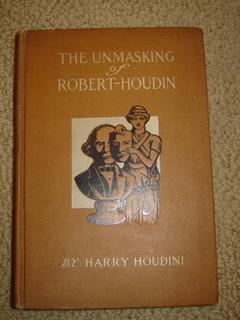 I'll tell you more about the book in a moment. But first, here's Jeff's story in his own words:
I got it when I was in college; I won a book-collecting contest sponsored by the campus library, and one of the privileges of winning was being able to purchase some of the duplicates in their special collection. They kept another copy of the book...which was not only signed, but had some kind of message from Houdini to whoever he gave it to.
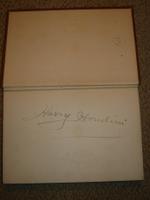
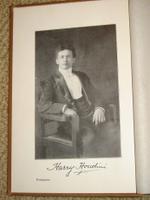
Compare the autograph with the printed signature on the frontispiece. Looks like a pretty good match!
These days, with the inflation in anything Houdini-related, I'd guess it's worth about $1000.00 - $2000.00, maybe more depending on the auction. But I'm keeping it.
About the Book
The Unmasking of Robert Houdin was a smear book written by Houdini against his former idol, French "Father of Modern Magic" Robert Houdin (from whom Houdini had taken his name). By all accounts it's a grossly unfair book filled with scurrilous arguments. Noted magic writer Jean Hugard even went so far as to publish a series of articles refuting the book in his magazine, Hugard's Magic Monthly.
Here's a great account of the whole silly affair that Houdini's friend, famed magician, magic dealer, and writer Will Goldston wrote in his book Sensational Tales of Mystery Men (1929). Goldston chalks up the whole embarrasing episode to Houdini's obdurate pig-headedness; Houdin's family had refused to meet with him in France and Houdini was not one to take any perceived insult lightly.
If you want to see what all the fuss was about, you can do so thanks to Chris Wasshuber's fabulous Lybrary.com, which offers PDFs of classic magic books at very reasonable prices. They have a downloadable version of The Unmasking of Robert Houdin here. There's even a link to Hugard's 1957 response, Houdini's Unmasking.
---------------------------------------------------------------------
Thanks for sharing the story and the pictures, Jeff. Since Houdini remains the most famous (and collectible) magician who ever lived, I think you win the "great magic find" award! Any other nominees?
So maybe this one should have gotten away. Ba dum bum.
--------------------------------------------------------------
I have another, more interesting story to tell you, however, this one from fellow magi Jeff. In a comment to my Hofzinser post, Jeff mentioned his own great find, a signed copy of Houdini's 1906 The Unmasking of Robert Houdin, for which he paid $7.50 back in 1982.
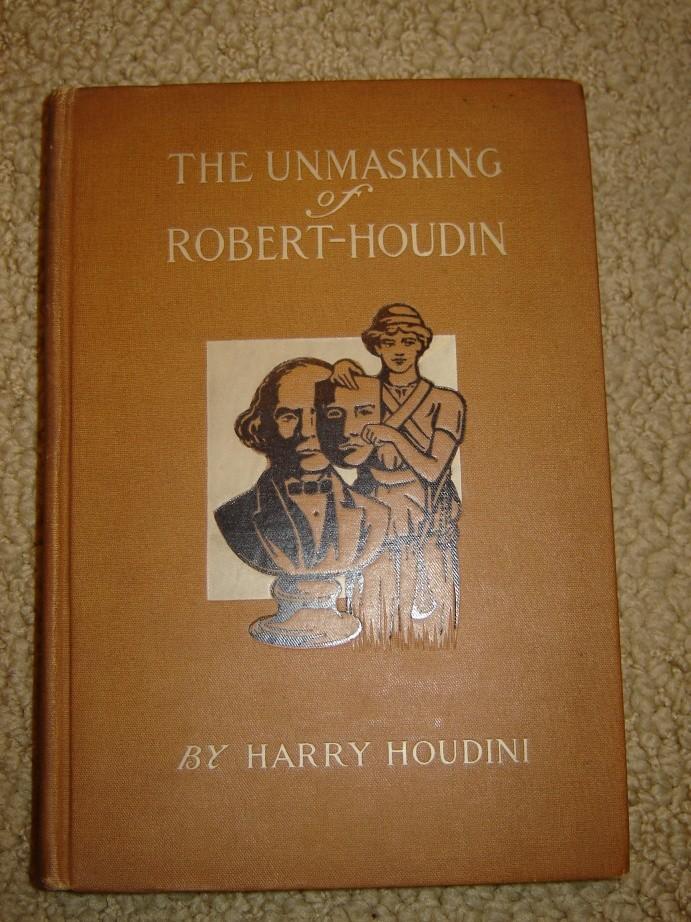 I'll tell you more about the book in a moment. But first, here's Jeff's story in his own words:
I got it when I was in college; I won a book-collecting contest sponsored by the campus library, and one of the privileges of winning was being able to purchase some of the duplicates in their special collection. They kept another copy of the book...which was not only signed, but had some kind of message from Houdini to whoever he gave it to.
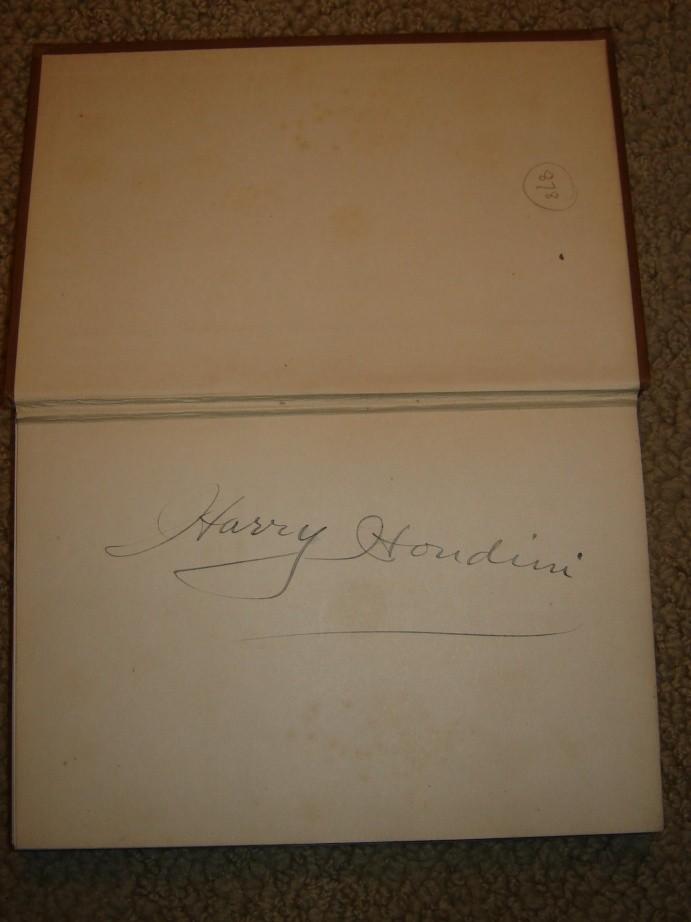
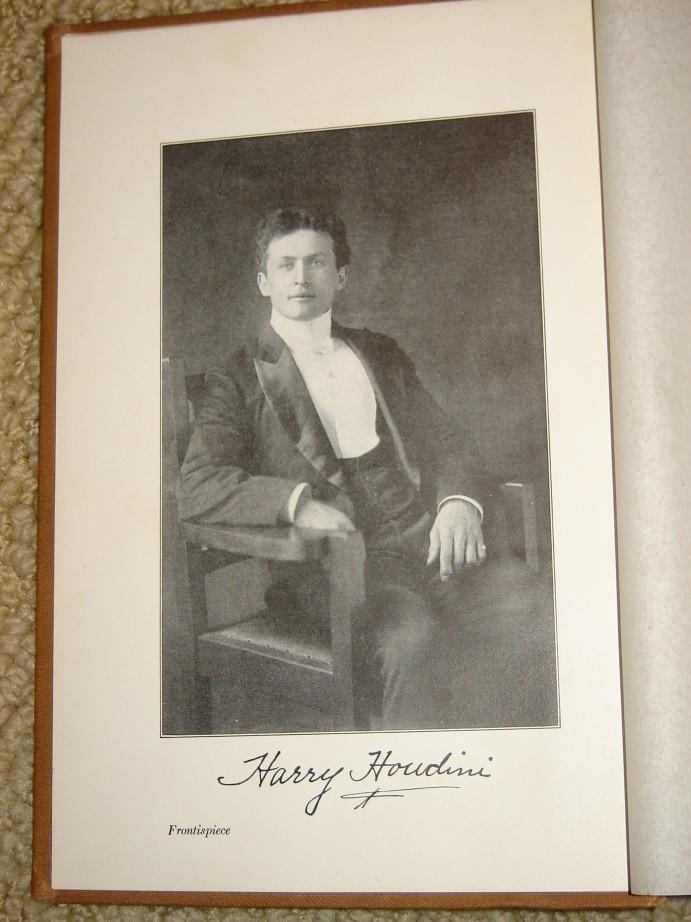
Compare the autograph with the printed signature on the frontispiece. Looks like a pretty good match!
These days, with the inflation in anything Houdini-related, I'd guess it's worth about $1000.00 - $2000.00, maybe more depending on the auction. But I'm keeping it.
About the Book
The Unmasking of Robert Houdin was a smear book written by Houdini against his former idol, French "Father of Modern Magic" Robert Houdin (from whom Houdini had taken his name). By all accounts it's a grossly unfair book filled with scurrilous arguments. Noted magic writer Jean Hugard even went so far as to publish a series of articles refuting the book in his magazine, Hugard's Magic Monthly.
Here's a great account of the whole silly affair that Houdini's friend, famed magician, magic dealer, and writer Will Goldston wrote in his book Sensational Tales of Mystery Men (1929). Goldston chalks up the whole embarrasing episode to Houdini's obdurate pig-headedness; Houdin's family had refused to meet with him in France and Houdini was not one to take any perceived insult lightly.
If you want to see what all the fuss was about, you can do so thanks to Chris Wasshuber's fabulous Lybrary.com, which offers PDFs of classic magic books at very reasonable prices. They have a downloadable version of The Unmasking of Robert Houdin here. There's even a link to Hugard's 1957 response, Houdini's Unmasking.
---------------------------------------------------------------------
Thanks for sharing the story and the pictures, Jeff. Since Houdini remains the most famous (and collectible) magician who ever lived, I think you win the "great magic find" award! Any other nominees?
Wednesday, August 17, 2005


Tuesday, August 16, 2005
The One That Didn't, Part 2 -- The Castle
So I got this amazing book for twelve dollars, the copy of Hofzinser given by Faucett Ross to Dai Vernon back in 1932. And I actually KNOW Vernon, not well, but I see him all the time at the Castle and I've hung out with him on a few occasions. He's even seen my act in the Close-Up Room; he said, "Very nice!" on the way out and I have to believe it was more than courtesy that he said it.
It's 1990, Vernon's 96 years old, and here's this book he signed in 1932, when he was already 38, and I realize, "Jesus, he's been around for a helluva' long time!"
So when I get back to L.A. I call up my buddy T.A. Waters, the brilliant mentalist who wrote "Mind, Myth, and Magic," one of the, oh, ten best books ever written on mentalism. T.A.'s one of those remarkable people who know quite a bit about a wide range of subjects, with a specialty in the subterrenean side of things, the occult, the strange, the magical, and the dark. But he's not a dark guy; he's a lot of fun to hang out with. And I'm pretty sure he likes me, because I'm smart.
He taught me a lot, particularly that you could be very smart and very knowledgeable (about magic and other things) and believe, based on the evidence you have seen and the people you know, that the world is stranger than any of us really think. Yes, T.A. was definitely one of the more influential people in my life.
So I tell T.A. about this amazing find, this book given to the Professor (as Vernon was known to the magical community) back in 1932. And I tell him it must be worth a pretty penny. And he says, "Well it would have been worth more a few years ago, but the book's been reissued so it's not as rare anymore." I remember being surprised at how non-savvy he was about collectibles. It seemed obvious to me that the main value in the book was in its extraordinary provenance, not the rarity of the book itself.
But my question to T.A. was, "Should I return it to him? I only paid twelve bucks for it and I think it might be cool for him to get it back."
T.A.'s answer was classic. "Well, he gave away everything he ever owned so I doubt he'd want it back. But if you do give it to him, you should definitely wait until Larry Jennings and Bruce Cervon [well-known "inner circle" close-up magicians who frequented the Castle for years in order to hang around and learn from Vernon] and a few others are there with him and see you do it. You don't need to be excessively honorable."
The truth was, I didn't really want to give it back to Vernon, since I knew it was valuable, both dollarwise and as a fascinating, unique collectible. But I thought it would be noble to try. So I went to the Professor the next time I was at the Castle and told him about the book. "Do you want it back, Professor?"
"No, I don't want that back!" he said dismissively and without further interest. So I had it free and clear.
The next time I went to the Castle, which was a few days later, I brought the book. I showed it to John Carney, who had studied with Faucett Ross while growing up in Iowa (Carney had the best line ever about Iowa: "When I tell people I'm from Iowa they always say, 'Oh Iowa! I've been to Columbus...[pause]...and I love potatoes!'")
So I showed it to Carney and he took one look and said, "That's Faucett's handwriting," which really made it more "real," somehow.
And on that night, Larry Jennings offered me $500 for it, and Jim Patton (the Magical Bartender) sighed when he saw it and then snorted when I told him what I'd paid for it. And up in the library (it was still "up" in those days, before it moved to the basement), I showed it to some guy I didn't really know who said he was a collector. He offered me $500 for it, too.
That was fifteen years ago. Vernon is long gone, Jennings is gone, T.A. is gone, Bill Larsen, the magical owner of the Magic Castle, is long gone...
But I've still got my book.
Sunday, August 14, 2005
The One That Didn't - Part One
What an interesting experience, this blog! On my last post, the great item that "didn't get away" is a magic book I found for a super bargain price (more on that in a moment). However, rereading the post I suddenly realized it's NOT about the book, which I got for a song (hence no heady deliberation and choice of options to buy or not to buy), but about a particular painting my soon-to-be-ex-wife and I aquired in Prague for our tenth anniversary. So I've decided to split this into two separate stories, both interesting in their own way.
It's August 10th, 1990 (I still have the receipt), and I'm visiting a friend in Chicago, on the campus of my old alma mater, the University of Chicago. I pop into Powell's Bookstore, a famous used book store on 57th, right in the neighborhood. I'm perusing the used magic books (in the "Games" section -- shows you the respect with which magicians are held), and out of the corner of my eye I see an old blue spine with gold lettering, "Hofzinser."
 Hofzinser, for my non-magician friends, was a stupendous "drawing room" conjuror in nineteenth-century Vienna. He invented a number of standard moves and, more importantly, plots, in use by card magicians to this day. Ricky Jay included a tribute to Hofzinzer in his Obie Award Winning Ricky Jay and His 52 Assistants, closing the first section of his show by performing one of the master's elegantly structured tricks.
So my hand shot out and grabbed the book, hoping against hope that it wouldn't be fifty dollars or so, since I knew I'd be tempted but didn't really know what the book was worth.
The book turned out to be the first English language edition (by S.H. Sharpe in 1931) of Ottokar Fischer's classic work, Hofzinser's Card Conjuring (1910), a book that was to have an enormous impact on the whole generation of close-up artists who "set the ground" for modern close-up, all the way up to Dai Vernon, who famously attributed his advice to "be natural" directly to Hofzinser.
As I checked the inside cover I was delighted to see a price of $12 on the inside cover, a bargain for this book, even fifteen years ago. But I was even more delighted to see the inscription, "To D.W. Vernon, with proper reverence, Faucett W. Rossio."
In other words, this is a copy of Hofzinser that Faucett Ross (as he's better known to magicians), friend and confidante of Vernon's (and later mentor to noted close-up performer and teacher John Carney) gave to his buddy Dai Vernon. And, Holy Shit! Vernon himself signed and dated it "1932!"
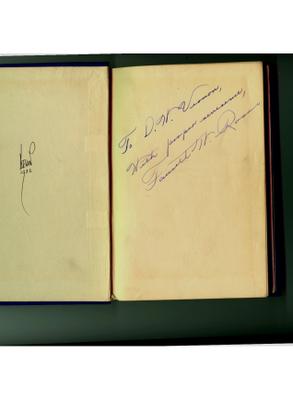
Twelve bucks. THIS one I got! And since I'm tired, you'll have to wait until the next post for the story of what happened when I went back to L.A. with the book and showed up at the Magic Castle with it.
And then after that, the real One That Didn't Get Away -- and why maybe it should have.
It's August 10th, 1990 (I still have the receipt), and I'm visiting a friend in Chicago, on the campus of my old alma mater, the University of Chicago. I pop into Powell's Bookstore, a famous used book store on 57th, right in the neighborhood. I'm perusing the used magic books (in the "Games" section -- shows you the respect with which magicians are held), and out of the corner of my eye I see an old blue spine with gold lettering, "Hofzinser."
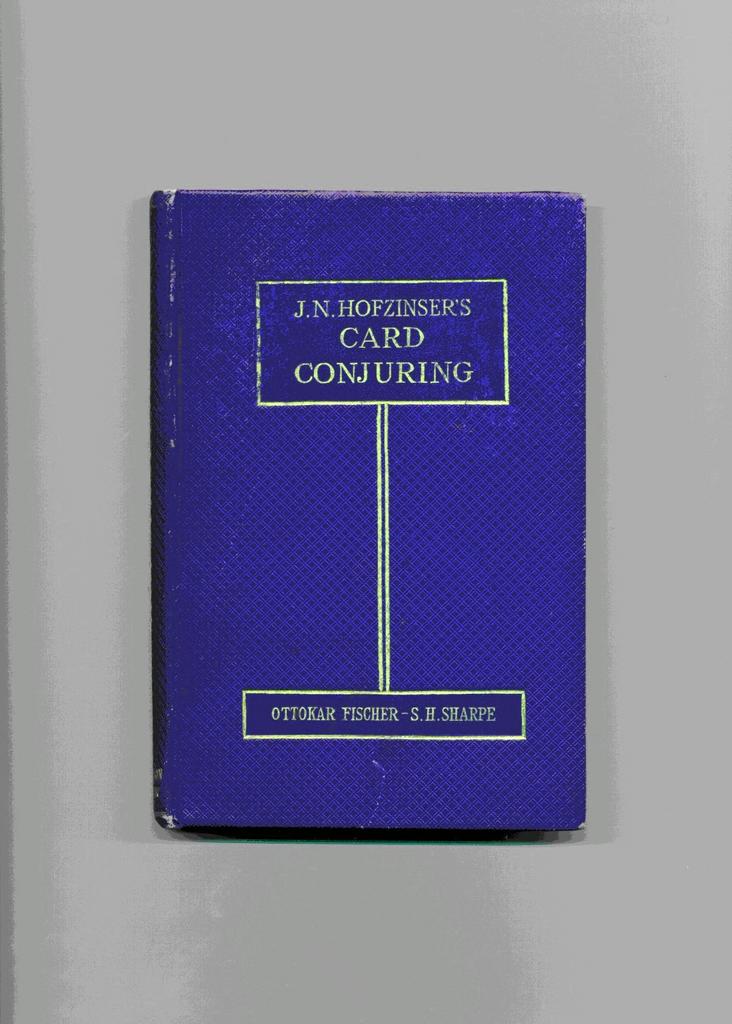 Hofzinser, for my non-magician friends, was a stupendous "drawing room" conjuror in nineteenth-century Vienna. He invented a number of standard moves and, more importantly, plots, in use by card magicians to this day. Ricky Jay included a tribute to Hofzinzer in his Obie Award Winning Ricky Jay and His 52 Assistants, closing the first section of his show by performing one of the master's elegantly structured tricks.
So my hand shot out and grabbed the book, hoping against hope that it wouldn't be fifty dollars or so, since I knew I'd be tempted but didn't really know what the book was worth.
The book turned out to be the first English language edition (by S.H. Sharpe in 1931) of Ottokar Fischer's classic work, Hofzinser's Card Conjuring (1910), a book that was to have an enormous impact on the whole generation of close-up artists who "set the ground" for modern close-up, all the way up to Dai Vernon, who famously attributed his advice to "be natural" directly to Hofzinser.
As I checked the inside cover I was delighted to see a price of $12 on the inside cover, a bargain for this book, even fifteen years ago. But I was even more delighted to see the inscription, "To D.W. Vernon, with proper reverence, Faucett W. Rossio."
In other words, this is a copy of Hofzinser that Faucett Ross (as he's better known to magicians), friend and confidante of Vernon's (and later mentor to noted close-up performer and teacher John Carney) gave to his buddy Dai Vernon. And, Holy Shit! Vernon himself signed and dated it "1932!"
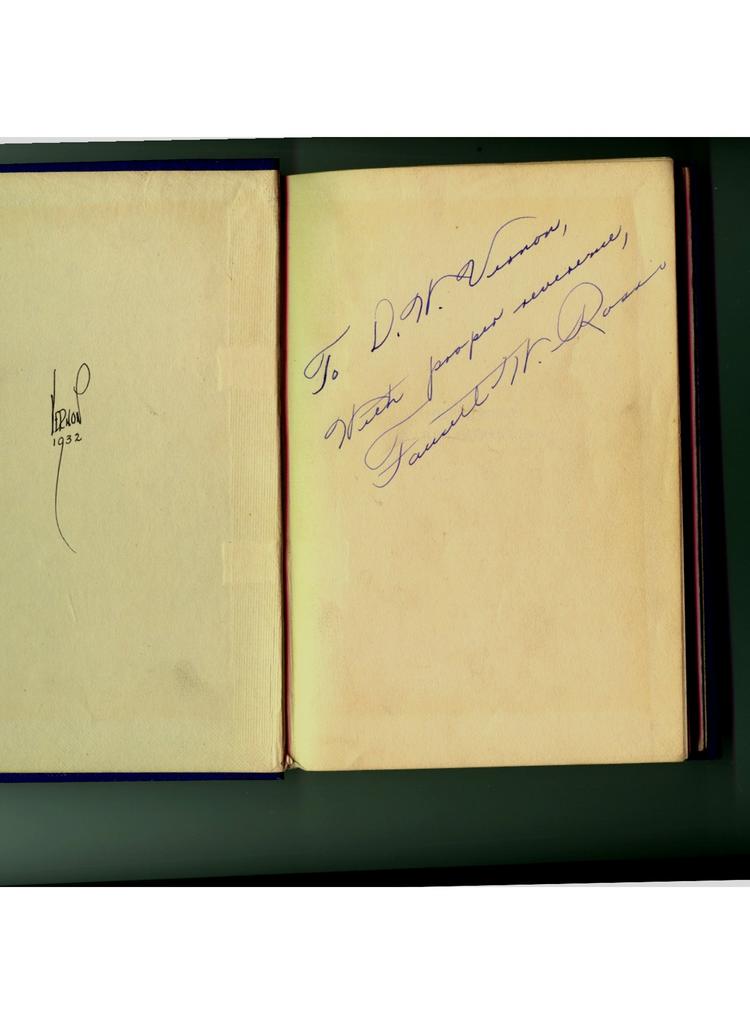
Twelve bucks. THIS one I got! And since I'm tired, you'll have to wait until the next post for the story of what happened when I went back to L.A. with the book and showed up at the Magic Castle with it.
And then after that, the real One That Didn't Get Away -- and why maybe it should have.
Friday, August 12, 2005
Ones that Got Away (and One that Didn't)
Everyone has a story like this. Back in 1963, my aunt and uncle in New York went to the fiftieth anniversary exhibit commemorating the legendary 1913 Armory Show, in which America got its first major public glimpse of such future modern luminaries as Picasso, Braque, Matisse, Brancusi, and Duchamp (whose Nude Descending a Staircase #2 was a scandalous cause celebre).
So my aunt and uncle were checking out the show, perusing these now-legendary paintings, some of which were for sale (priced in the six-figure range, which was a lot of money back then). There were also paintings by well-known "second wave" Moderns for sale, too. The one they fell in love with, the one that tempted them, was an early painting by Stuart Davis, which was selling for the eminently-reasonable-but-too-much-for-young-teachers price of $12,000.
They came, they saw, they were very tempted...but in the end they decided that what must have been a year's salary (I'm guessing here, actually I have no idea) was a bit too dear to spend on a piece of art, lovely or not.
I have no idea what a Stuart Davis sells for these days, but I'm sure you could add a couple of extra zeros to the 1963 price and probably still fall quite short...
My own experience like this happened about fifteen years ago in L.A. I was wandering through a very nice art gallery in Santa Monica and I happened upon an extraordinary piece of art glass unlike anything I had ever seen before. It was dark electric violet with a a rather striking yellow accent, about two feet tall and shaped like a willowy flowing sea creature. The price was $6000, which was too much money for me to seriously consider-- but low enough for me to seriously consider (IF you know what I mean).
The artist was, it turned out, a pretty famous glass artist with his own glass school in Seattle; I looked through a book of his work and vowed to remember his name.
My more art-centric readers will no doubt have guessed that the piece was by Dale Chihuly, now an internationally famous artist (not just "glass" artist) and an artist for whom smaller, inferior works fetch $25-50,000. The piece I passed on looked somewhat like the one below, but much much nicer: a bit taller and darker (dark electric purple with a psychedelic yellow accent) and more vaselike, and more flowing. And backlit, like the one in the photo.

I'll swear to this day that I've yet to see another Chihuly piece as nice as the one I passed up. Damn. If only...
Chihuly's forms have been heavily imitated over the past fifteen years, but back then this was a stunning and unexpected piece. Chihuly almost single-handedly transformed the field of blowing glass into an accepted, legitimate Art. I consider him to be as important an artist as Frank Lloyd Wright, and would be honored to have his work in my home.
Truly, the increase in value of the piece would be immaterial to me; If I had it I'd never sell it.
Next up: The extremely nice magic-related collectible that didn't get away, or My very very very good day at the used bookstore.
So my aunt and uncle were checking out the show, perusing these now-legendary paintings, some of which were for sale (priced in the six-figure range, which was a lot of money back then). There were also paintings by well-known "second wave" Moderns for sale, too. The one they fell in love with, the one that tempted them, was an early painting by Stuart Davis, which was selling for the eminently-reasonable-but-too-much-for-young-teachers price of $12,000.
They came, they saw, they were very tempted...but in the end they decided that what must have been a year's salary (I'm guessing here, actually I have no idea) was a bit too dear to spend on a piece of art, lovely or not.
I have no idea what a Stuart Davis sells for these days, but I'm sure you could add a couple of extra zeros to the 1963 price and probably still fall quite short...
My own experience like this happened about fifteen years ago in L.A. I was wandering through a very nice art gallery in Santa Monica and I happened upon an extraordinary piece of art glass unlike anything I had ever seen before. It was dark electric violet with a a rather striking yellow accent, about two feet tall and shaped like a willowy flowing sea creature. The price was $6000, which was too much money for me to seriously consider-- but low enough for me to seriously consider (IF you know what I mean).
The artist was, it turned out, a pretty famous glass artist with his own glass school in Seattle; I looked through a book of his work and vowed to remember his name.
My more art-centric readers will no doubt have guessed that the piece was by Dale Chihuly, now an internationally famous artist (not just "glass" artist) and an artist for whom smaller, inferior works fetch $25-50,000. The piece I passed on looked somewhat like the one below, but much much nicer: a bit taller and darker (dark electric purple with a psychedelic yellow accent) and more vaselike, and more flowing. And backlit, like the one in the photo.

I'll swear to this day that I've yet to see another Chihuly piece as nice as the one I passed up. Damn. If only...
Chihuly's forms have been heavily imitated over the past fifteen years, but back then this was a stunning and unexpected piece. Chihuly almost single-handedly transformed the field of blowing glass into an accepted, legitimate Art. I consider him to be as important an artist as Frank Lloyd Wright, and would be honored to have his work in my home.
Truly, the increase in value of the piece would be immaterial to me; If I had it I'd never sell it.
Next up: The extremely nice magic-related collectible that didn't get away, or My very very very good day at the used bookstore.
Thursday, August 11, 2005
UPDATED: Hip-Hop and the Mainstream - Growing Pains
It seems that whenever I post about hip-hop my darling readers become inflamed, but in this case I can't resist. The SF Chronicle has an article in the Datebook section today titled Who would have thought it? Rap legend RZA hangs out, chats at Commonwealth Club gig.
It's a pleasant enough article, but the premise -- that it's somehow newsworthy when a hip hop artist gets taken seriously by the straightlaced Commonwealth Club -- demonstrates clearly just how out of touch the mainstream press really is, even in left-leaning San Francisco. After all, as a founding member of the seminal hip-hop collective Wu-Tang Clan and a successful film composer to boot, the 39-year-old RZA is a major modern artist by almost any standard. The fact that he's (presumably) virtually unknown to a large percentage of the Chronicle's readership is as much a commentary on their ongoing failure to adequately cover an important artist than on the supposed "clash of cultures" being covered.
My fur ruffled a bit at the opening paragraph:
What becomes a legend most? When the legend in question is the man behind one of the most influential hip-hop crews in history, the answer is not a public affairs forum such as the Commonwealth Club. But then, most musical artists don't philosophize about chess and martial arts and Islam and the mythology of organized crime.
Notice the patronizing tone and assumption of that last sentence, that "musical artists" (a clever shorthand for "hip-hop artists") are not cultured, educated about their work and the world around them, or diverse in their interests. If you doubt my take on this, try to imagine that a pop writer like, oh, Stephen King was the subject of the article instead. But then, most writers don't philosophize about chess.... Or how about if the article was about a different kind of "musical artist?" But then, most opera singers don't philosophize about chess....
In any of the above examples, readers would immediately smell something foul. "What do you mean, 'Most writers don't philosophize about chess...?' Writers are an intelligent, worldly lot!" Apparently, this kind of inherent respect doesn't extend to hip-hop artists, at least in the SF Chronicle.
Somewhat later in the article (on the back page), writer Neva Chonin asserts: It shouldn't have worked, this collision of disparate worlds of a stodgy public affairs forum and a profane street poet.... This would seem to score one for hip-hop, but is it necessary to refer to one of the most successful and influential recording artists of the last decade as a "profane street poet?"
Just calling out for a little respect, that's all. The day hip-hop is truly accepted as another valid art form will be the day a visit to the Commonwealth Club by a hip-hop artist ceases to be news.
UPDATE - August 31, 2005
Today's Chronicle has a letter to the editor (scroll down a bit) from one Max Woodworth in Taipei, Taiwan (I guess the mail from Taiwan travels really slowly). Woodworth essentially covers the same ground I did (though much more eloquently) in six paragraphs. I like his closing section:
...The forum could not have been a testament to hip-hop's "new place in the cultural canon" for the simple reason that hip-hop is not new, neither as an art form nor as part of our cultural canon. Practically every facet of our popular culture bears the marks of hip-hop, and this has been the case for about 20 years.
From speech to clothing to mannerism, hip-hop is everywhere and has been for a long time. The real shock should be that RZA hadn't been invited a decade ago to the Commonwealth Club. But I'm grateful, at least, that the forum was covered. It's a start.
As an update to my update, I Googled "Max Woodworth Taipei Taiwan" and discovered that he is a correspondant for the Taipei Times. At least, I assume he's the same Max Woodworth; I'll let you know if anything else turns up.
Monday, August 08, 2005
LSD and Schizophrenia
In a comment last week, JB asked: Have you ever thought that perhaps schizophrenics are in a permanent state of delusion, much like someone on LSD or some other hallucinogen?
This very view dominated psychedelic research in it's first ten years, this notion that LSD mimicked psychosis or schizophrenia. It wasn't until the 1960s that a different paradigm emerged to describe the effects of psychedelics, when people who weren't researchers started to use them recreationally and, echoing their use throughout history, sacramentally.
In fact, I disagree with the inherent premise of the question, that LSD and other psychedelics create delusional thinking. People seldom become delusional on LSD; certainly it can happen and certainly this aspect of LSD seems to be very similar to what many people believe the experience of schizophrenia to be like. But overwhelmingly it's the wrong metaphor -- for both psychedelics and schizophrenia.
The most interesting work with psychedelics arises from their use in illuminating aspects of the physical, emotional, spiritual, or metaphysical world we live in. Schizophrenia, on the other hand, is pretty much defined by the inability to accurately perceive one of more of these aspects and the concomitant inability to function in the real world. Psychedelics like LSD can be extremely useful in sensitizing therapists to the "real feel" of schizophrenia by illuminating the kind of extreme shifts in consciousness experienced by those suffering from the disease. But therapists should never forget that their ability to distinguish psychedelic effects from "normal" consensual reality sets them apart from true schizophrenics.
Interestingly, in the early years of LSD research (1950s and early 1960s) LSD was explored as a treatment for schizophrenia. Check here for an overview of some early, extremely promising research with schizophrenic children. Can you imagine the brave soul who would ask to try out such research today?
Unfortunately, all research was abruptly halted in 1966 when politics overrode science and LSD was outlawed. The extraordinary potential of these substances remains tragically underexplored, although groups like the Multi-Disciplinary Association of Psychedelic Studies (MAPS) are doing yeoman's work in fighting for funding and approval for research into these substances. A brief perusal of their site gives hope that we are entering a new age of psychedelic exploration.
God, I love this blog!
Not much to add, except it's one more miracle brought to me by the Internet! Lemme' hear a "Hallelujah!"
Seriously, man, I just love that I have place to throw out ideas as I see fit, to try to pour the most interesting parts of myself out there into the world. Obviously, there are areas I don't go into, but by and large my passions are on the screen for all to see. I've been without evening Internet access these last couple of weeks so my posting has tended to be of a less personal nature. (I can't compose a personal entry at work, that just doesn't...work, for me.)
Perhaps as aspects of my personal life become clearer I'll be more inclined to post about them. Perhaps.
I'm also thinking seriously of starting a spinoff blog for my film reviews. That way, others who love film as I do will have a place to go see my (hopefully interesting) take on various films without having to dig through this blog to find them. I think I have excellent taste and a unique background, having studied film extensively (with the late Gerald Mast, author of numerous standard texts on film history) and having also worked in the film industry in the late Eighties/early Nineties, in L.A., New York, and Prague.
At any rate, even if absolutely no one wants to read them, at least I'll have a place to put all my reviews and an extra, public motivation to keep doing them...
Saturday, August 06, 2005
The Iraq War Fatalities Project
I have added a link at right to the elegant and elegaic Iraq War Fatalities Project. I note that Iraqi casualties are not listed, which makes the war, terrible though it looks, seem signifantly less obscene. With civilian casualty estimates ranging from 25,000 to 100,000 or more, it is important to remember Robert Fisk's comment that, "War is about human suffering and death."
Is this being done in my name?
Is this being done in my name?
Wednesday, August 03, 2005
R.I.P. Mark Chorvinsky
Mark Chorvinsky, founder of Strange Magazine has died of cancer at 51. I knew Mark somewhat when I worked at Dream Wizards, his legendary gaming store in Rockville, Maryland way back in the (gasp!) late Seventies. I was never into gaming; I worked the magic counter (at one point, I demoed magic at Dream Wizards and the late great Al's Magic Shop at the same time).
One of the fellow magi I used to hang out with was a talented kid named Alain Nu, who now has his own TV show. On the Magic Cafe Forum a couple of weeks ago, Alain said, "I really mean it when I say that [Chorvinsky] was my greatest influence in mentalism. He was the man who showed me the 'real world' of strange phenomena!"
Unfortunately, at the time I was working for Mark I was a diehard CSICOP skeptic. I knew nothing and cared nothing about the serious investigation of strange scientific anomolies; as far as I was concerned, it was all bunk and those who took such subjects seriously were deluded cranks. Not the best attitude to take if I wanted to be friends with Mark!
Mark was definitely ahead of his time in both the world of gaming and that of borderland scientific research. I wish I could have had the chance to meet him again as an open-minded adult.
Subscribe to:
Posts (Atom)