
Friday, April 28, 2006

Blaine - Ten Years Later


I'm going to draw a line in the sand on the issue of David Blaine, right here and now. I believe that David Blaine is the most important magician since Houdini and that he single-handedly saved the great art of magic. Those of us in magic right now are blessed to be able to witness the most extraordinary renaissance the art has seen for a century -- and we have David Blaine to thank for it.


I have long commented to anyone who would listen that the biggest problem with magic is that it's very difficult to make it resonate as a great art. Take a top pro and let him work a cocktail party. He'll blow people away and get them laughing. But I maintain that if one of the guests breaks out a guitar and starts singing some reasonably good songs, the magic will be quickly forgotten as the music transports everyone in the room. In other words, a competent but unexceptional singer will trump even a gifted magician in almost every case.

There have been many talented magical performers over the years, some of them even quite brilliant, but no one before Blaine figured out how to make magic so astonishing that people watching it on television actually got excited, wanted to see more, and concluded that the magician performing it was the hippest guy in the room.

No one before Blaine figured out how to become a superstar doing magic. Not a famous punch line, but a genuine superstar. When David Copperfield was engaged to Claudia Schiffer, the rumor mill churned that he was gay and that their relationship was a business arrangement (he denied it). Here's a guy who's handsome and graceful, who has made $100 million doing magic -- and his girlfriend has to worry that dating him might be a bad career move!

Blaine never had that problem. He's the first famous magician who's an equal to any possible model or actress he dates. Fiona Apple, Josie Maran, even Madonna -- none of them needed to worry about how it looked for them to be sleeping with this magician.

------------------------------------------

Street Magic: Of the People, By the People, For the People

I just watched Street Magic, the very first Blaine special from back in 1997, on TLC. Just happened to be on, and I watched it.

Good lordy oh lordy. This kid's a fuckin' genius. I mean, really. Today, nearly a decade later, every magician under twenty-five of any note is doing David Blaine. That super soft-sell, totally straightforward and clear, the absolute committment to the effect, the nearly-laconic pace which ramps up the intensity...this is all Blaine.

And those eyes! That hypnotic gaze, staring intently into the eyes of his spectator. Blaine not only stares deeply into the eyes of beautiful women (an excellent technique for seduction as well as deception), but also into the eyes of men -- strapping football players, gangbangers in Compton, an elderly Chinese man. He's the first TV magician secure enough with his sexuality to risk looking gay by connecting with male spectators on a very visceral level.

Watch Street Magic again and it's clear that it's not about magic at all. It's about people. Blaine travels the world bringing magic, wonder and joy to people of all colors, cultures, and socioeconomic backgrounds. He makes everyone wonder-ful, filled with wonder, and the viewer at home feels the connnection, too.

--------------------------------------------------------

In a way, this is the project started by the late Doug Henning. Henning strove to bring the experience of magic to everyone, the sense of wonder. Henning gave magic back to the people, and the people loved him for it. I owe my own passion for magic in large part to seeing Henning perform in The Magic Show on Broadway twice in it's initial run.
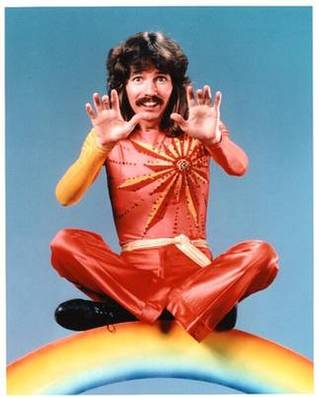


But Henning was never hip. Henning was a hippie kid, loveable but outsider. Henning gave up magic to study Transcendental Meditation, which only made him seem like an oddball to the mainstream population. I remember seeing Henning on the Merv Griffin Show in the late Seventies, talking about how advanced TM meditators could float up off the ground. A skeptical Burt Reynolds, who was also a guest, had a field day with Henning.

-------------------------------------

Evaluating Blaine

Blaine, different story altogether. Blaine, in his scruffy tee-shirt and slouchy pants, looks like every other young American. Except that he seems to possess extraordinary powers.

I know they picked the best reaction shots, the spectators whose world was turned upside-down, the occasional person who seriously questioned whether he was a conjurer or something supernatural. But all of these choices add up to something more than just promoting the cult of David Blaine. Through the vehicle of Street Magic, Blaine is a peacemaker, a uniter, a lover of humanity. Blaine uses magic to drop walls, to humanize people, to snap them out of their familiar patterns and see the world as magical, beautiful.

Genius performer. Genius.

And the guy's absolutely brilliant with a deck of cards. I know about all the magicians who like to bash him: he's not original, he does stuff I can do, he does stuff I've been doing for years, his doubles aren't clean, blah blah blah. Well, let me tell you, on that special Blaine performs a bunch of fairly sophisticated effects, not super-dooper, knuckle-busting tough, but far from easy.

His card work is graceful, smooth, and brilliantly well-covered. His use of direction and misdirection is superlative; in fact, I think most magicians are totally incapable of understanding just how well Blaine covers his work and so they underestimate his genius. This kid was only twenty-three years old at the time this special was shot. But he kills like a master.

If you're a magician and you can follow what he's doing, try watching his audience management skills. Blaine is always absolutely in control of the spectator. He knows when to give the spectator room to breath, laugh, and react and he knows exactly how to reel him or her back in for the kill. You can tell watching this special that Blaine has serious performing chops.

There's an effect he does where a little girl's selected card disappears from the deck and appears in the girl's back pocket. Blaine's pacing on this one is astonishing; the girl (who looks to be about eight or nine) and her mother are totally blown away. In fifty years, this little girl will be a middle-aged woman who loves magic and remembers -- vividly -- the time that amazing guy made her card jump into her pocket. As a viewer, it really feels like you're watching over the girl's shoulder. I have no doubt most non-magician viewers were as blown away as the girl.

When Street Magic first aired, people literally went out of their way to tell me how much they enjoyed it. Kids, teenagers, old people, absolutely every non-magician I talked to who watched the special thought it was truly, well, special. They fell in love with magic, since Blaine communicated a sense of wonder not seen for years.


---------------------------------------

The Blaine Backlash

Okay, it's time I addressed the whole issue of TV magic, selective editing, and all those ridiculous hot-button issues launched into the magical stratosphere by the explosive popularity of Blaine's special. The job of the magician is not to be honest. It is, as Darwin Ortiz says in Strong Magic, "to create the illusion of impossibility." If you can use television to help create the illusion of impossibility, by all means do so. You'll be doing your job properly.

There's a lot of sniping directed his way regarding Street Magic's promiscuous use of reaction shots. Give ME the chance to film myself doing an effect fifty times and let ME pick the two or three best reactions out of fifty, and I'll seem like a genius, too, seems to be a common analysis. Well, guess what?

You're absolutely right. And if you ever get your own TV special, I'd certainly recommend that you pick out the best reactions to show, too. Why wouldn't you? Do you really think it would have been a better TV show, a better magic show, if Blaine had shown those times when people had been less blown away? Do you really think it would have honored magic to show the guy who said, "That's pretty cool. I used to do that stuff, too. Here, let me show you the trick with the three rows of seven cards..." blah blah blah?

Blaine (with rumored help from an uncredited Spike Lee) figured out a way to translate the very best experience of magic onto television: show people being blown away, floored, absolutely balls-out astonished. They become the eyes and ears of the people watching at home. Over the last ten years, probably the most common thing people tell me when they find out I'm a magician is that they love David Blaine (or, "that kid who does street magic") and still marvel at things they saw him do years ago.

------------------------------------------

Blaine's Influence

Blaine triggered a complete paradigm shift in the magical community.

No, scratch that, I'll come back to that paradigm shift in a moment. The existing magical community didn't change at all; in fact, it predictably responded with a vast reservoir of hostility. People absolutely hated that Blaine became a superstar doing what in many cases were tricks they had sitting in their magic drawers at home. They said, "I could have done that! I've had an Invisible Deck for years! I've used the Coin in Bottle for that gag for years! He's nothing special."

There it is, that moment of denial. Magicians everywhere should have been saying, "Holy smokes, look at all the powerful material I have available to me right now!

"Thanks, David Blaine, for showing me how to use it!"

Magicians the world over should have seen the success of Street Magic and concluded, "Oh, now I understand. People don't want lame patter about little sponge bunnies breeding, about Gypsies and fairy dust, about card elevators. They just want to be shown something impossible. They want to see their signed card put in the middle and suddenly -- magically -- be on the top."

And let's not get past the fact that Blaine's an extremely handsome and sexy guy. Right there, a lot of jealous magicians (who don't tend to fit the above description) were ready to write him off. Blaine uses his charisma and sex appeal on everyone, male and female, young and old. And -- bless my heart! -- he doesn't dress up all fancy, either! No tuxedos for Blaine; he performs on the streets in jeans and a tee-shirt. Another crime in the stuffy magic world circa 1997!

But here's the number one reason why a lot of magicians hated Blaine. Blaine was a mirror held up to other magicians which reflected back their own lameness. By 1997, magic had been in a decades-long slide into absolute mediocrity. After Street Magic, anyone who wasn't as good as Blaine suddenly found himself facing an educated audience no longer interested in sitting still for crappy magic tricks.



A boatload of terrible magicians had quietly poisoned the reputation of magic as an art for years. Even worse, they had gotten a free pass from the magic community.

Then Blaine came along and ruined it for all of them.

-----------------------------------------------

Saving Magic: The New Generation

Although the mainstream of magic failed to embrace Blaine, an entire generation of young magicians has grown up in his sphere of influence. Indeed, a most amazing thing has happened as a direct result of that first Street Magic special: magic has become hip. The "street magic" style popularized by Blaine is now all over the Web, in the spawn of Penguin and Ellusionist, and in clever young performers like Daniel Garcia, Wayne Houchin, and Morgan Strebler.


TV shows like T.H.E.M.(Totally Hidden Extreme Magic) and Mondo Magic brought cutting-edge magic to a whole new audience. T.H.E.M. featured the performance group Magic X, which includes PeaceLove's Musings fave Cyril Takayama. Probably the most high-profile magician of the moment is Criss Angel, star of A&E's Mindfreak. Angel is a major talent in his own right, but his show is undeniably an offspring of Blaine, combining as it does roving street magic with Blaine's other great breakthrough: endurance stunts.

--------------------------------------

Blaine has spoken at length about his admiration for Houdini, a Hungarian-born Jew who grew up dirt poor and rose to become one of the most famous and idolized entertainers in the world. Although Houdini began and ended his career as a magician, his greatest fame came through his extraordinary ability to convince the world he could escape from any type of restraint. As part of his mythos, Houdini presented himself as almost a superman, a man more physically gifted than others. To this end, he trained himself as a contortionist, learned to hold his breath for minutes at a time, and made sure to have himself photographed frequently in little more than a loincloth -- the better to show off his impressive physique.

Blaine was smart enough to realize early on that he had taken "street magic" about as far as it could go. By the time his later specials aired, the Web was full of sites explaining many of the basic effects Blaine made famous, including the Balducci levitation. Blaine must have understood that in order to build his fame and reputation he would have to move on to bigger and better things. So he began to formulate the endurance stunts that now dominate his specials -- sixty-one hours encased in a block of ice on Times Square, thirty-five hours atop a small platform a hundred feet in the air, ending with a jump down onto a pile of boxes, and, most famously, forty-four days fasting in a glass box suspended over the River Thames in London.


Blaine isn't the first magician to attempt far-out endurance stunts, but he is the first geniune superstar since Houdini to do so. He has been able to present his endurance feats as spiritual trials, a quest to further the bounds of his personal abilities -- and, by extension, to demonstrate to his audience that humans are capable of truly extraordinary levels of survival and endurance. Blaine always maintains a stance of absolute humility; he continually expresses that he is grateful for the opportunity to explore his own limits. (In this, he has distinguished himself from his idol Houdini, by all accounts one of the least humble performers in history.)


This stance, this framing of the endurance trials as some sort of higher calling, a quest to find and exceed the outer limits of the physically possible -- this is yet another area where Criss Angel owes a huge and largely unacknowledged debt to Blaine.

Drowned Alive

On May 1st, Blaine will begin his latest performance. He plans to spend seven days on public display submerged in a tank of water (with food and oxygen lines), at the end of which he will attempt to hold his breath for almost nine minutes. It's a bold, brilliant step in a provocative career, and I for one will be watching ABC on May 8th when it all comes down to the wire.

-----------------------

This post has been corrected since it first went up. Please see the comments for my embarrassing mistakes.

UPDATE: 12/12/10
Below are some follow-up posts on Blaine:
Racherbaumer on Blaine
Baine - Drowned Alive
MCJ on Blaine (from 2004)
Burden to Ono to Blaine
Blaine and Me



MCJ on Blaine (from 2004)

Thursday, April 27, 2006

Where have you been, PeaceLove?

Thanks for asking! I've been busy with my life and this blog has been on the back burner. I have a bunch of posts in the works and I'll start putting them up here soon. First up in the next day or so will be a major appraisal of David Blaine. Ten years ago, Street Magic exploded on the magic scene and saved magic. Or so I will argue.

I've also been thinking a lot about the future, especially about the power of technology to ramp up our ability to save the world. Trouble is, every time something new and exciting comes up, by the time I'm ready to write about it something even newer and more exciting crops up! To paraphrase the Man on the Train from Waking Life, this is absolutely the most exciting time in the history of the world. So whatever you do, don't be bored.

I'm an optimist. People are getting smarter and smarter every year, every day...hourly. Young people today are working at a much higher level than ever before. They are more progressive, more tolerant, and more united and full of love for all of humanity than any previous generation in history. This isn't to say the world is perfect, only that the global connectivity spawned by the Internet and other technologies is vastly boosting human intelligence and creativity and greatly improving our chances in the long run.

-------------------------

Meanwhile, I'm continually impressed by the explosion of great material unleashed by the Web. Here, via Screenhead, is Scottish animator Sharon Colman's Oscar-nominated short, Badgered. It's nothing earth-shattering, but it's cute and spare -- and it's nice that anyone with an extra six minutes can now see it.

Monday, March 27, 2006

From the NYT: A School for Magic

Today's New York Times has a lovely article about a college of magic in a poor area of Cape Town, South Africa. Although the article mostly avoids any serious discussion of the art, it does focus a spotlight on the way the school and its program helps disadvantaged kids to gain confidence and life skills.

It's nice to see magic represented in such a generally positive light.

------------------------------------------

Presto! A School for Magic Creates Hope Out of Thin Air
By MICHAEL WINES

KHAYELITSHA, South Africa — Life is hard for the 750,000 or so people crammed into this shantytown, one of South Africa's largest and toughest. In the last census, in 2001, 6 in 10 adults here said they had no steady income. What little money they have tends to vanish quickly, spent on essentials or stolen in the break-ins and robberies that are endemic here.

The way Phumile Dyasi makes money vanish is rather less common...

[snip]

For six years, 16-year-old Phumile has studied prestidigitation at College of Magic in Cape Town, a sort of kindergarten-to-baccalaureate institution for aspiring conjurers. Making coins disappear is the least of the tricks he has picked up.

From a shy 10-year-old who knew only Xhosa, South Africa's principal indigenous tongue, Phumile has grown to speak fluent English and handle audiences with aplomb. In 2004, he was chosen the best young magician in Western Cape Province. In March 2005, he was in Las Vegas, honing his skills with some of the world's top magicians. He hopes to make entertainment a lifelong career.


[snip]

Link (may require free NYT registration)

TOTH to my buddy Tim for the link.

Monday, March 13, 2006

Google Mars


Holy shit. This is for real.

And here's a very cool JPL-created flythrough (High res. version available here). Take your Dramamine!

-------------------------------------------

Percival Lowell's 1895 map shamelessly appropriated from Google, too.

Wednesday, March 08, 2006

Awesome Magic Clips -- Tim Ellis & Sue-Anne Webster


Tim Ellis and Sue-Anne Webster are a pair of super-talented (and, by all accounts, super-nice) Australian magicians who've earned themselves quite an international reputation among the cognoscenti. They also run an excellent blog called Magic Unlimited, which is a reliable source of fun, clever ideas, and spot-on advice from a couple of busy professionals. Tim is a two-time FISM winner, which should give you some idea of the level he's working at.

I'd never seen any of their material until today, but I just discovered that they have some fantastic clips online:

It starts with Tim's famous Runaround Sue routine. This is a beautifully constructed piece of magic, tightly executed. Next up is Sue-Anne's Jeannie act. This one's charming but needs more material, in my opinion, since not enough happens to justify the setup. The Floating Table's always struck me as painfully obvious, and the audience's delayed, lukewarm reaction would seem to support my instincts on this one. But the premise is terrific, and Sue-Anne's a delightful presence ("Lucky Tim!" seems to be a common reaction among their male fans, including this one.)


The third clip is Tim's presentation of the classic Razor Blade effect, and it's also tight, funny, extremely clear, and very deceptive. The last one is their presentation of Houdini's Substitution Trunk. This is one of the most overused illusions in magic (here's a dull but servicable version) and I've always felt that, for the most part, there's no reason to do it now that The Pendragons have taken it to such a high degree of polish.

Tim and Sue-Anne turn it into a raucous party; it's one of the most entertaining things I've seen in a long time (and makes me wish I was there when they performed it). Highly recommended!

----------------------------------------------------

Tip of the Hat to Brendan Croft of the Magic, Illusion, and Data Managment blog, where I first saw these clips. They load a lot faster on Ellis and Webster's own site, so that's the link I provided above.

Sunday, March 05, 2006

My Earliest Supporter

I still remember when I first heard about this. I was flying on cloud nine all week!

Wednesday, March 01, 2006

Jason Latimer on Craig Ferguson

Yes, it's Link Week here at PeaceLove's Musings. Thanks to Pagliacci, here's Jason Latimer doing his clear Cups and Balls routine on Craig Ferguson's show. I had heard about this routine but it's nice to finally see it; it's a whole new approach to an old classic. Beautiful!

(And he's only twenty-three, grrrr...)

Kudos to Ferguson for giving this talented magician a spot. Late-night talk shows, once a prime venue for magicians, have become harder and harder to crack. Johnny Carson was an amateur magician himself so he featured a variety of top pros over the years, including Michael Skinner, Michael Ammar, and Lance Burton. When Leno took over, the magic came to an end (I once heard that neither he nor his booker likes magicians).

Thanks to the Web, some of the top magicians in the world, even ones who never perform in the U.S., can now be seen online. But it's still great to see an up -and-comer like Latimer get his shot on network TV. Check it out and see why he was named the "Grand Prix World Champion of Magic" at the 2003 FISM competition.

Tuesday, February 28, 2006

Requiem for a Toy Story

The excellent Shining trailer launched a mini-wave of satiric trailer mashups, including the lame Brokeback to the Future and others. But here's a really sharp one, Toy Story 2 reimagined as a tripped out cautionary drug tale via Darren Aranofsky's extraordinary Requiem for a Dream. It's cut to mimic Aranofsky's jittery rhythms; who would have thought that Woody would work so well as a junkie burnout?

This came from the always fantastic BoingBoing, which has a number of mirrors in various formats, just in case the link above doesn't work.

Thursday, February 23, 2006

Instinct

Here, care of Salon.com's Video Dog, is a very funny faux commercial. This understated gem took top honors in Salon's Video iPod Giveaway. Enjoy!

Note: If you're not a subscriber to Salon, you will need to click on the ad for a free, one-day pass. No big deal; they don't collect personal info and they won't bombard you with pop-ups.

Monday, February 20, 2006

Schadenfreude

Check out this touching new anthem about our sharpshooting Veep.

Well, okay, it's actually a rather malicious -- but very funny -- reworking of Aerosmith's dark classic Janie's Got a Gun.

Sample lyric:

Dick Cheney's got a gun.
Cindy Sheehan had better run.
Better cover her liberal bum...


(snicker)

Wednesday, February 15, 2006

Magic, Magic, Everywhere

Here's a terrific article about magic in film and television from USA Today. I've posted it in full because it's worth a read:

Magic does the trick in upcoming thrillers

By Susan Wloszczyna, USA TODAY
Wed Feb 15, 7:24 AM ET

Hollywood is focused on hocus-pocus.

Maybe the sight of wizards young and old as they summon CGI wonders in the Harry Potter and Lord of the Rings fantasies has left audiences yearning for an older brand of magic.

If they are, several moviemakers have a few projects up their sleeves that may do the trick this year.

Prestidigitation performed on camera, not on a computer screen, is front and center in two thrillers set during the abracadabra heyday at the turn of the last century:

The Prestige, in production in Los Angeles and out in November, pits Hugh Jackman against Christian Bale as dueling British magicians.

"I play one of the greatest magicians of the time period," says Jackman, who also co-stars with Scarlett Johansson and David Bowie in the film directed by Christopher Nolan (Memento, Batman Begins). "It's an incredibly original story, a mind bender with twists and turns. The entire script is a magic trick."

In The Illusionist, Edward Norton is a Viennese master of marvels whose seemingly supernatural skills threaten a dogged chief inspector (Paul Giamatti) and an ambitious royal (Rufus Sewell).

"I'm no more into magic than the next guy," writer/director Neil Burger says. "But I am interested in that uncanny sense that nothing is what it seems. All the illusions are based on existing illusions from the time. We just pushed them another 10%-25% and made them more fantastical."

For more contemporary magic, Jeremy Piven (Entourage) plays Las Vegas magician Buddy "Aces" Israel, whose fraternizing with the Mob lands him in trouble in Smokin' Aces, directed and written by Joe Carnahan (Narc).

Piven, who learned a few trade secrets from his teacher, Scottish magician R. Paul Wilson, loved the rush he felt from amazing a crowd. "The turning point for me was when I got up at the Magic Castle and pulled a trick off in front of an audience. It was completely intoxicating." He was so hooked that while on the set, "I would use my cards like worry beads."

Woody Allen, a longtime lover of legerdemain, plays a second-rate vaudevillian stand-up and magician in his next film, Scoop.

"Yes, I do magic tricks and a lot of jokes," he says. "I did them onstage when I was 15 or 16. I can still do them because I practiced so rigorously when I was a teenager and it just stays with me."

Even American Idol crankster Simon Cowell is getting into the act. He just announced plans to hold a TV talent search for Vegas entertainers, especially magicians, this summer on NBC. "Personally, I hope to find the next Siegfried and Roy," he says.

Michael Weber, a smoke-and-mirrors pro who runs a magic consulting company, Deceptive Practices, with card specialist Ricky Jay, advised on both The Prestige (the term for the residue left after a trick) and The Illusionist. "We all share a collective unconscious about some uncle pulling a coin out of his ear," says Weber, who is about to help design the con games in Ocean's Thirteen. "We concentrate on that magical common experience. Our job is to have it make sense in a movie context."

Most actors he trains tend to be naturals, he says. "As the father of modern magic, Robert-Houdin, said, 'A magician is an actor playing the part of a magician.' "

Still, not every actor gets to be a magician off-screen, as Jackman learned.

"I said to the guys, 'Is there any chance you could just tell me a card trick?' " he says. "Not for the film but for parties. They said no. Their motto is, 'Arcane knowledge on a need-to-know basis.' I didn't need to know. I could have really saved money on my children's party entertainment, though."


Link

Thursday, February 02, 2006

Criss Angel and Cyril - UPDATED

I posted a while back about magician Criss Angel, star of Mindfreak on A&E. The magic blogosphere remains a hotbed of virulent anti-Angel criticism, most of it quite reactionary and unsupported. I think part of the problem stems from the complete inability of most magicians to put themselves into laymen's shoes.

I just caught two more episodes of Mindfreak, one in which Angel lights himself on fire before vanishing and reappearing as one of the "fire extinguisher guys," and the other an episode where Angel, suspended on fleshhooks in his back, is helicoptered over the landscape. The latter does not qualify as magic, of course, since (I assume) he actually did the suspension exactly as shown.

Angel did a couple of pretty strong tricks during the first episode. In one, standing on the sidewalk and surrounded on all sides, he vanished from beneath a big garbage can and reappeared on a balcony above. In another, he demonstrated a voodoo doll on unsuspecting passers-by; when he jabbed the doll in the leg, for instance, the spectator felt a sharp pain in her leg. He then offered the doll to the spectator, who jabbed it into various body parts. Angel gave a gasp and started bleeding from the selected body part (leaving the spectator feeling vaguely guilty -- a nice twist).

One of the best things about Angel is the familial aspect of his projects. He's New York Italian Greek all the way, and two of his brothers are part of "Team Angel." So we get plenty of, "This is the most dangerous thing my bruddah has ever done"-type talk, along with a lot of "I love my bruddah and I'm worried that he could get seriously hurt." For the "Criss on Fire" episode, his mother comes to Vegas for her seventieth birthday and is rewarded by seeing her son running around on fire (a sight which seems to her genuinely, and unsurprisingly, traumatic). But all ends well, with "I love you, Ma" and hugs all around.

The "Hanging by Fleshhooks" episode was more a piece of performance art than magic, but it was a pretty stunning thing to see on television. Reviewing back to the time he had spent six hours suspended horizontally (in "Airplane" position") on fleshhooks in New York City, Angel then discusses with his team the greater difficulty and pain involved in hanging vertically from a single line of hooks. Luckily, they had a "master piercer" on hand to insert the hooks.

-----------------------

We've come a long way. I remember, about fifteen years ago, when I first read ReSearch Publications seminal book Modern Primitives and learned about (among other things) body suspensions. At that time, the notion of hanging from fleshhooks, which has its origins in a Native American ceremony, was extremely underground; Fakir Musafar, who coined the term "modern primitives," had to worry about being arrested when he performed the ceremony for the extraordinary film Dances Sacred and Profane (which is now, after twenty years, available on DVD).

How amazing to see a body suspension on TV! As part of a mainstream magic show! Although the world has changed and become more tolerant, it's also safe to say that Criss Angel has positioned himself on the cusp of that change. He doesn't come across as particularly weird or fringe at all; he's a nice, somewhat Goth, mama's boy. Who hangs from fleshhooks and sets fire to himself.

I don't know where he's going with this, but I'll definitely be watching.

-----------------------------------

Which brings me back to Cyril Takayama, the talented L.A. kid who moved to Japan and became a star. Cyril is something of a "magician's magician." He takes what are in many cases standard effects and turns them into things of beauty, often fooling knowledgeable magicians in the process. Best of all, Cyril is an enormously appealing performer -- gracious, clever without being a smartass, handsome but not macho, graceful, courteous, and very smart.

Regular readers will know that I'm a big fan of Cyril's magic. His stuff is all over the Web these days, and here are a few more stunners:

Cyril does the Signed Card through Window -- on a glass-bottomed boat!

Cyril boils a Cup-a-Noodles -- in his bare hands on the street!

Cyril performs a beautifully layered, deliriously deceptive old classic. I'm especially fond of this one, since it shows how a great performer can use timing and pacing to increase his impact tenfold. Watch how Cyril sells this effect. Beautiful.

And, just in case you haven't gotten your fix of Cyril, here are some more.

-----------------------------

Thanks to my old buddy FK for the latest round of Cyril links, which he sent me a week or so ago. I went two weeks without a post, a lifetime in the blogosphere, but I'll try to keep up a more regular schedule from now on. Stay tuned for more magic-related posts, among others.

UPDATE: I almost forgot. While I was sitting on my ass and not posting these Cyril links, Pagliacci posted a few others here, including a most-excellent -- and extremely deceptive -- mashup of the classic coin effects Matrix and Miser's Dream. Well worth checking out.

UPDATE #2: Oops! In my original post above, I inadvertantly misidentified Cyril's hometown. He is from Los Angeles and the post has been corrected.

Neill Blomkamp

Neill Blomkamp is a young South African filmmaker and visual effects specialist recently name-checked on BoingBoing. Check out his crazy Show Reel first; Webheads might have seen his Citroen "Transformers" commercial, which was all over the Web a few years ago.

But most impressive are a couple of short films he directed. TempBot is a mysterious, deep satire on the depersonalization of modern office life. This is an extraordinary piece of work, beautifully cut; the rhythms have the scattershot tension of classic Nicolas Roeg films like The Man Who Fell To Earth and Bad Timing. The soundtrack -- synth, alien, and jarringly mechanical -- is no throwaway, either.

I'm not sure what "Wonder Woman" Lynda Carter is doing in there, but she still looks great playing the lonely, middle-aged neighbor of the title, er, character.

Another superb short is the pseudo-documentary Alive in Joburg, a newsreel style report on how a race of aliens has landed in Johannesburg and the effect they are having on the local population. Alive in Joburg blends RoboTemp's cinema verite feel into a subtle commentary on race and class; this is satire buried so deep as to be almost invisible. Very impressive work.

In case the above link doesn't work, Alive in Joburg is also available here.

Saturday, January 14, 2006

Copperfield Does Fearson's Laser Illusion - UPDATED

I'm not normally a fan of David Copperfield, but this performance of the now-famous Laser illusion is awesome (once you get past the lame dance intro). Leaving aside his big "TV effects" like the vanish of the Statue of Liberty and the float across the Grand Canyon, this is one of the best illusions Copperfield has ever done.

---------------------

The inventor, Steve Fearson is one of magic's great creative eccentrics. Some years ago, he set about to invent "anytime, anywhere" versions of three great standard illusions. The first of the three was a wacky levitation, Fearson's Fantastic Floatation. Next up was the sawing in half illusion (originally named Splitting Image) that became the Laser, for which Copperfield promptly purchased the worldwide rights for a rumored six figures. The final effect was the much maligned but nevertheless fabulous Goodbye Vanish, which is about the best cheap and dirty solution to a one-person impromptu vanish imaginable. My Friday Night Magic cohort and I have probably used the Metamorphosis presentation of the Goodbye Vanish about a hundred times on unsuspecting guests; it's a blast!

Fearson is also a legendary weirdo/showman, and he frequently comes out with effects alleged to have been extracted from the dark underbelly of magic, psychological black ops, hypnosis, and the psychic underground. One of these, The Station Manager Document, was accompanied by an entertaining line of bullshit (the life of the "anonymous" tipper would supposedly be in danger were his identity known) that many took seriously.

A couple of years ago, Fearson announced that he would be selling his online magic business and starting a church. The blogoshpere buzzed, but to date Fearson is still selling magic online. He's currently in the crosshairs for giving away a number of magic ebooks for free that contain effects and secrets that are not his to give away. He's also shilling a hypnotism course for an alleged master hypnotist called "Taylor Starr" (who might just be Fearson himself).

[UPDATE - 2/21/06: See the Comments to this post. "Taylor Starr" himself claims he is not Fearson and in fact doesn't even know Fearson.]

Fearson's status as a magical creator is pretty solid, but his tendency to overhype his products has made him a controversial figure in the magic community. My own take of Fearson is that I'm happy to have someone as colorful as he is to brighten the normally gray magic world!

--------------

Copperfield link via Magic Spank.

Thursday, January 12, 2006

Matrix: Omnigendered

From Rolling Stone, here's the wild story of Larry Wachowski, one half of the Wachowski brothers duo who brought us the Matrix trilogy. Seems old Larry has intriguing sexual proclivities and may or may not have undergone a sex change operation -- perhaps to bring him closer to his former-dominatrix girlfriend Ilsa Strix.

Intriguing read. The publicity surrounding such a high-profile transvestite (transsexual?) can only help shine a flashlight on these extremes of consensual sexual behavior -- and perhaps help diminish some of the prejudice faced by those with non-mainstream-hetero tastes in our society.

Plus, it sounds like a pretty good idea for a zany romantic comedy. Do you think maybe it's a little bit ahead of its time?

Thursday, January 05, 2006

Did Bush Wiretap Amanpour?

John Aravosis' excellent AMERICAblog is covering the developing story about whether Bush's gang wiretapped CNN's Christiane Amanpour. This all began when NBC's Andrea Mitchell specifically posed that question to James Risen, the New York Times reporter who first broke the story about domestic wiretapping. NBC has now changed the transcript to delete the question, but here's the original transcript:

Mitchell: Do you have any information about reporters being swept up in this net?

Risen: No, I don't. It's not clear to me. That's one of the questions we'll have to look into the future. Were there abuses of this program or not? I don't know the answer to that

Mitchell: You don't have any information, for instance, that a very prominent journalist, Christiane Amanpour, might have been eavesdropped upon?

Risen: No, no I hadn't heard that.


It's not clear why Mitchell would ask such a specific question, but the blogs are all over this story and it will not be allowed to die quietly. Speculation is that Amanpour's husband, former Clinton administration senior advisor Jamie Rubin, might have been the intended target. Check out Aravosis' analysis of the situation. Scary.

But -- almost as sinister a question -- why did NBC edit the question out of the transcript? Their stated reason is they removed the lines in question "so that we may further continue our inquiry," but, as Aravosis says,

Since when is NBC in the business of deleting entire paragraphs from their official transcripts? What's going on here?

Stay tuned, folks. I predict that this story will not go away. Even the mainstream news media will take an interest when the civil liberties of one (possibly more) of its own are under attack.

Wednesday, January 04, 2006

Another New Hero: David Letterman!

Wow! The previously apolitical Letterman sharpened his critical sword after his 2000 quintuple bypass. That brush with death, along with the extraordinary outpouring of love and support from virtually the entire media spectrum, seemed to have lent him a new fearless streak. For instance, shortly after his post-surgery return, he had a startlingly fierce toss-off line about George W. Bush's upcoming appearing on Leno: "Oh yeah, there's a real summit of the minds."

I don't watch Letterman very often anymore, so I was pleasantly thrilled by this clip from yesterday's show, in which he opens a can o' whupass on Fox mega-creep Bill O'Reilly. Letterman really strips away O'Reilly's bullshit on such issues as the alleged "liberal war on Christmas" and the war in Iraq. He seems especially angry when O'Reilly tries to claim that bereaved mother Cindy Sheehan is controlled by far left elements. Letterman: "I'm very concerned about people like yourself who don't have nothing but endless sympathy for a woman like Cindy Sheehan. Honest to Christ."

It's lovely to see O'Reilly squirm, especially when Dave delivers the the coup de grace, after a particulary caustic exchange: "Bill, it's always a pleasure," followed by his hand extended for a shake. Translation: "Thanks for coming on the show. Now get the fuck out of my studio."

---------------------

Thanks - again -- to Salon for the link.

Monday, January 02, 2006

New Hero: Keith Olbermann

I never watch MSNBC, so I'm only vaguely aware of Keith Olbermann as a former sportscaster and occasionaly nemesis to Fox pitbull Bill O'Reilly. What a delightful surprise, then, to see him taking down a Fox News hatemonger named John Gibson. Gibson, (who I'd not previously heard of) is the author of the heartwarming The War on Christmas: How the Liberal Plot to Ban the Sacred Christian Holiday Is Worse Than You Thought (Sentinel, October 2005). Olbermann, a former friendly collegue of Gibson's, had named him one of the "World's Worst People" for comments Gibson had made about "people who practice the wrong religion" (non-Christians).

What makes this so delicious is that Gibson, along with O'Reilly, promptly denounced the "smear" and claimed to have been taken out of context. Thanks to the Web (and specifically, the excellent Crooks and Liars site), Olbermann's fiery response, with proof, is available for everyone to see. This is an energizing seven minutes and a terrific way to ring in the new year!

------------------------------

Link via Salon.

Thursday, December 29, 2005

Jackson Bollocks

Happy Holidays, everyone!

I'm in the middle of a fun back and forth with an Anonymous commenter who apparently takes exception to the premise of my previous post, the idea that mashups are worthy of consideration as Art. I've decided to pull the discussion out of the Comments section and relay them in this new post rather than spending all my energy on stuff that many readers will likely never see. (I'm leaving all original comments in place, too.)

I'm assuming that all the Anonymous commenters are the same person. If they're not, well, they are now.

-------------------------------------------
Here's the exchange so far (although I flipped the order slightly to improve the flow). Anonymous' comments in italics:

"The best mashups match beats and rythms, blending or contrasting tone and theme, into wholly new and original works."

WHOLLY NEW AND ORIGINAL WORKS???

Surely you jest...

...and the analogy to Picasso is absurd - Picasso mastered the form. Very different from taking two paintings and digitally laying them one over the other.


And my response:

Rare indeed is the work of art which does not in some way build upon existing sources. When two or more elements are combined to create a new work which comments on and expands on the sources, the new work is an original work of art.

I used Picasso to make a point, but I acknowledge in retrospect it may not have been the best choice since he DID in fact invent Cubism. But I think you'll find if you study Picasso that he lifted many forms from African art. This is the nature of art and culture.

Perhaps Roy Lichtenstein would be a clearer example of a major artist who appropriated material from popular culture and turned it into new works of art.

In music, avant-garde composer John Cage famously had a composition in which a bunch of people turned up radios set to random stations on pre-arranged cues. Imagine if some RIAA goon had been sitting in the audience taking notes ("Let's see, 12 seconds of The Beatles Lovely Rita, twenty seconds of Miles Davis, twenty-two seconds of Sinatra's Love and Marriage..."); Cage literally would have been unable to perform the work!

At any rate, I think American Edit is a superb work of art which is fundamentally different from Green Day's American Idiot. Obviously, "Dean Gray" took advantage of excellent source material, and their mashup honors Green Day while creating an original and fantastically energetic soundscape.

Remember, too, that this was a NON-COMMERCIAL work of art; no one ever attempted to make any money on this. The idea that artists can't freely make art unless they get "permission" strikes me as deeply offensive and anathema to a society that prides itself on its free exchange of ideas.

"In music, avant-garde composer John Cage famously had a composition in which a bunch of people turned up radios set to random stations on pre-arranged cues."

And it famously wasn't very popular. Coincidence? You decide...


Where did popularity enter the picture?

Kinda then depends on your definition of "make art."

If any hack with a computer can then sling together two existing works, then where's the art?

Here, I'll play: I'll drop paint splatters on a Sex Pistols album. Boom! Jackson Bollocks! See? I've made art!


[For my less hip readers, Anonymous is suggesting a hypothetical mashup between Abstract Expressionist genius Jackson Pollack, he of the "Action" paintings, and the seminal punk album, Never Mind the Bollocks, Here's the Sex Pistols, which sports one of the most famous covers in rock history.]

Jackson Bollocks? Brilliant! Pollack was the punk artist of his day!

In fact, sometimes inspiration like that can be better than you think; "Jackson Bollocks" would be a hell of a tee shirt! Of course, Art also depends on context; the same "Jackson Bollocks" tee shirt would have a different meaning coming from, say, David Byrne than it would if you saw it for sale at The Onion store. But I hate the idea that neither you nor I could legally create the shirt, regardless of context, even if we wanted to GIVE THEM AWAY and ask those who receive them to donate to alcohol and heroin rehab programs for starving punk painters.

Regardless, it is NOT the case that "any hack" slinging together two existing works can produce American Edit, any more then my ten-year-old slinging paint at a canvas can produce a Pollack. You're entitled to your opinion, of course, but if you can't see the Art in excellent mashups like American Edit or The Grey Album (or in Jackson Pollack, for that matter), then we probably don't have much more room for discussion.

There's a huge difference between 'influenced by' and 'lifted outright.' If you don't see that then we're speaking two different languages.

The term "lifted outright" is the same as "stolen," which seems a ridiculous term for an openly acknowledged remix. After all, American Edit is very much a tribute to American Idiot, and as such it has a significanly deeper meaning if you're familiar with the original work and understand the relationship between the two -- and the social and political meaning of mashups in general.

Incidentally, if you want to see "lifts," go check out The Chronicles of Narnia: The Lion, The Witch, and the Wardrobe, a film in which half the shots (the interesting ones) are lifted straight from the Lord of the Rings trilogy. Strange, I didn't see any attribution in the credits...

-----------------------------------

[A big shout out to Anonymous for the title of this post -- which I shamelessly appropriated.]

Tuesday, December 20, 2005

Fun with Mashups

'Tis is the season of the mashup. Mashups are the combining of two or more songs into a new musical collage. The best mashups match beats and rythms, blending or contrasting tone and theme, into wholly new and original works. The concept of mashups has been around for years; one of the earliest popular examples, a 1978 novelty song known as Stairway to Gilligan's Island, inserted the lyrics to the Gilligan's Island theme song into the music of Stairway to Heaven. (Full story here).

Back in the day, such mashups had to be done acoustically; with the rise in digital media extraordinary musical collages can now be done by enthusiastic fans with computers and talent.

Unfortunately, such mashups don't sit well at all with the recording industry, which prefers to attack fans rather than encourage them. Stairway to Gilligan's Island was banned almost from the moment it first appeared (but -- thank God for the Internet! -- it's once again widely available via P2P). The most famous example occurred with last year's The Grey Album, DJ Dangermouse's excellent collage mix-up of The Beatles The White Album and JayZ's The Black Album. Despite being selected as the number one album of the year by Entertainment Weekly, The Grey Album received a "cease and desist" letter from Beatles song publisher EMI, which effectively outlawed the music. (Have no fear; it's still widely available here and via P2P, samizdat music for a revolutionary digital generation.)

EMI's heavy-handed attempt to ban the album earned them much contempt in cyberspace, and on Grey Tuesday (February 24th, 2004) hundreds of Websites carried mirrors of the complete Grey Album in protest. Far from stopping this new work of art, EMI in fact brought it worldwide exposure.

BoingBoing's Cory Doctorow summed it up nicely:

Copyright maximalists like to contrast copyright with the old system of patronage, when you could only make art if you could convince the Pope or a duke or a king that your art was worthy. Patronage really distorted creative expression, and copyright did indeed promise to decentralize authority over what kind of art was permitted.

But the EMI rep's answer to the Grey Album is patronage. "You must not make this art unless we permit it." If you work for one of a few big record companies, you can use their legal apparatus to clear the material you want to use in a mashup. Otherwise, your art is illegal and will be censored.

I think patronage is wrong -- I agree with the maximalists here. Let's end it. Let's share these mashups, make samples without permission, and continue to produce art without permission from the latter-day aristocracy of creativity.


Cut to the present. Another great mashup, this one a remix version of Green Day's phenomenally popular American Idiot called American Edit. The mashup's creators, who go by the Green Day-flipping handle "Dean Gray," release their extraordinary album and ten days later they, too, get a "cease and desist" order, this one from Warners, Green Day's label. Another "Grey Tuesday" (December 13th, 2005), roughly a quarter million downloads, more embarrassment for the recording industry, and worldwide publicity for American Edit, which is still also available all over the Net via P2P (and HIGHLY recommmended by yours truly).

Here are a couple of other mashup albums to whet your appetite:

Q-Unit: Greatest Hits combines 50 Cent and Queen. The results are fun, if less revelatory than those in American Idiot. The back cover art is a terrific visual mashup: 50 Cent reimagined as Freddy Mercury!

And, just in time for Christmas, the funky Santastic: Holiday Boots 4 Your Stockings.

Imagine if Picasso had received a "cease and desist" order from reps for the African sculptors who inspired his seminal 1907 classic Les Demoiselles d'Avignon. He might have painted Blue and Rose people for his entire career!

The Magic Circle Jerk - Coda

I was really hoping Andy of MCJ had just disappeared forever; I think it would have been the ultimate capper to his brilliant (and mysterious) career. But in fact Andy sent out a general letter to anyone who sent him an email, a part of which is reproduced below:

Dear Reader,

Thank you for your recent kind and/or furious e-mail in regards to my site no longer existing. It's really not coming back so you can go ahead and delete it from your bookmarks or whatever.

I've gotten a lot of questions about the whole situation so I wanted to make a final statement to the fine people who used to read the site.

First, there was nothing that happened that caused me to shut down the site. It was just something that was going to happen eventually and last week was when it did, that's all. Nobody threatened me. Nobody coerced me. I didn't find religion (putting down the sponge ding-dong and picking up the sponge bible). I just kind of decided I needed to stop. The truth is, when I started the site I figured I would eventually run out of things to say and when I did the site would be over. But what happened was I kept on coming up with new ideas and while that would have been a blessing if I planned on writing a magic blog for the rest of my life, I never planned on such a thing and so it just became a distraction from other creative endeavors that actually put food on my table....

[snip]

Some people have questioned why I took down all the old posts. I didn't really put much thought into that, other than that it made more sense to me to say "poof" and have everything be gone, rather than say "poof" and have everything still be there. Those posts will be made available in some way in the future as well as about 50 unpublished posts that I have lying around here. I'm just not sure what I'm going to do with them yet.

Which brings up the question; what is next for this titan of magic? I'm not really sure, but I have a whole bunch of ideas. The first thing I'm going to do is take a few months off. Then I want to do a couple of things that are larger in scope and a lot of things that are smaller in scope than the blog was. Ultimately I just want to be involved in some different things magic-wise. The blog was a lot of fun, but what made it fun was that it was a new type of thing in magic, now it's something of an established form, so it's not as much fun for me personally.

[snip]

So, anyway, if you want in on whatever happens next send me an e-mail and let me know. It's not necessary, but you might want to provide a mailing address too because not all the news that comes out of the MCJ camp is going to be e-mailed. Even if you're not interested, feel free to get in touch any time. I'll be in the usual place.

[snip]

I hope everyone has a good holiday season if that's their thing.

Your pal,
Andy

Thursday, December 15, 2005

The Magic Circle Jerk

That broadly cynical bite in the opening sentence of my last post reminded me, as I was writing it, of Andy, the anonymous genius behind one of the greatest conceptual masterpieces the magic world has ever seen.

-------------------------

A couple of years ago, Andy made a fairly innocuous comment on The Magic Cafe, a popular Internet forum for magicians and wannabe magicians. Someone posted the question, "What's a good magic trick for picking up girls?" (The percentage of dorks on the Cafe is similar to the percentage of dorks in the magic community at large, which is to say about 95%.) Andy replied, "The Magic Ding Dong," a reference to a well-known smutty climax to the popular (and criminally overused) Sponge Balls trick.

Well, this silly little bit of risque humor got Andy banned from The Magic Cafe on the grounds that it was "inappropriate." No warning, no "check the rules and please refrain from making this type of post in the future." Just a flat-out ban.

I'm sure Cafe owner and operator Steve Brooks has regretted this banning ever since, because Andy's response was to start a blog, The Magic Circle Jerk, whose entire original purpose was to make fun of the Magic Cafe and it's overweight owner.

This is my forum to talk shit about magic and magicians. If you aren't into magic, you probably won't like it. If you are into magic, you probably won't like it either.

Rather quickly, The Magic Circle Jerk morphed into a more general blog about the sad state of magic and magicians. At the time, serious critical voices within the magic community were few and far between, so every post seemed like a blast of pure oxygen into a stale and stagnant community. As an added blessing, Andy proved to be an extraordinary blogger: by turns literate and raunchy, scathingly witty, ferociously astute, and casually hip.

Within a few months and with virtually no self-promotion, Andy's readership encompassed a quite healthy swath of the magic community. Andy had an amazing ability to cut right to the meat of any magic-related issue and find comic gold with his lacerating dissections. Frequent readers of this blog have probably followed more than one link to a Magic Circle Jerk post; in general, once Andy had covered a topic all the other magic blogs that sprang up in his wake had to scramble to find anything useful to add to the discussion.

I probably read the entire two+ years of MCJ posts all the way through at least three of four times; they were that astute and that funny. A small sampling of the topics either inspired by or covered by Andy:

The pros and cons of anonymous bloggers
The inanity of much of magic
The inanity of most magicians
The hypocrisy, greed, and inanity of magic marketing
The inanity of much of what passes for discussion on The Magic Cafe
The hypocrisy, greed, and, er, gluttony of Cafe founder Steve Brooks

Andy's beef with the Cafe emerged because of a double standard he noted; Cafe sponsors, especially if they were somewhat well-known in the magic community, got to say things mere mortals like Andy couldn't. As The Magic Circle Jerk became better known, Andy claimed to be getting inside information about the shady way the Cafe was run (exaggerating membership numbers in order to attract more advertisers, for instance), some of which he posted on his blog.

For a while (and perhaps still) Cafe members could get themselves banned just by mentioning The Magic Circle Jerk in a posting.

Andy always gave people a chance to respond, and some of the idiotic responses he got were jaw-droppingly funny. People threatened to sue him, threatened to beat him up, called him names...It's not a stretch to say that Andy was the Howard Stern of magic, the guy who broke open all the taboos with a combination of intellect, comedy, and scorching bad taste.

In one of his most inspired undertakings, Andy ran a contest to see who could start and maintain the most idiotic thread on The Magic Cafe. Circle Jerkers got points if their posts stayed up, which meant they couldn't be obviously fake (and with genuine threads like, "Which are better for card tricks, red-backed cards or blue-backed cards?", the challenge was harder than it seemed). I don't remember what post won, and it doesn't really matter. The point was that you really couldn't tell the fake moronic posts from the real ones.

Through all of this, Andy remained anonymous. From his posts one could determine the following:

He lives in New York.
He's probably somewhere between twenty-five and thirty-five (I'd guess around thirty).
He's very knowledgeable about magic.
He's very well educated.

From my own back and forth with Andy about psi research, I know that he has some mathematical and/or scientific training. Other than that, I know nothing. On his old Magic Rants blog (now reborn as MagiCentric), Steve Pellegrino claimed he knew where Andy worked.

As far as I know, no one else has a clue who this guy is. Rumors occasionally bounced around that he's actually a well-known magician who couldn't speak out under his own name for fear of losing his esteemed place in the magic world. But nothing ever came of any of the stories; Andy remains an enigma.

Since Andy started The Magic Circle Jerk, scores of magic blogs have sprung up. Many of them try to follow in Andy's footsteps; most of those come across as petty and nasty rather than astute. It's the difference between Jon Stewart and Michael Savage, wit and insight contrasted with infantile ranting.

A new generation of magicians has appeared on the scene in last decade, hip young magicians bred on David Blaine, Penguin Magic, and yes, The Magic Circle Jerk. For the first time in my lifetime, the public's image of a magician isn't necessarily the "fat guy in a bad tux with birds" (as Penn Jillette used to say). Young magicians are more aware of both their audiences and themselves -- and it shows in their performances.

The influence of The Magic Circle Jerk cannot be overstated, in my opinion. The Web has facilitated an open exchange of ideas impossible in previous eras, and among magic voices MCJ was in the vanguard of that shift. Many who never read it, indeed who never even heard of it, are benefitting from the dialogue wrought by MCJ. There have always been individual iconoclastic voices in every field; magic has had its Jarretts, its Annemans. But it took the distributed, networked power of the web to bring such a refreshingly caustic voice to the masses (of magicians).

-------------------------------------------------------

On Tuesday, November 29th, at 2:22 a.m., the entire Magic Circle Jerk blog, archives and all, vanished with a --POOF--. It's Andy's final turn of the screw, his closing masterpiece, the sublime crowning touch of his short and brilliant career. I hope against hope that he remains anonymous forever, the Erdnase of his day, an enigmatic figure who arrived on the scene, changed the face of magic, and vanished into myth.

The historian in me would like to see his complete archives turn up in an expensive coffee-table book for the holidays, a Protocols of The Magic Circle Jerk. Of course, without those everpresent and hilarious links, a coffee table book of MCJ would probably be a leaden affair indeed. Perhaps it can reappear somewhere on the Web, an essential document in the early Twenty-first Century salvation of magic.

This was my forum to talk shit about magic and magicians. If you weren't into magic, you probably didn't like it. If you were into magic, you probably didn't like it either.

My New Venue

UPDATE: The picture is a hoax. After initially claiming it was 100% genuine, Josh sent me the same picture with different words in the sign. Oh well, I guess I can call off the lawyers.

--------------------------------------------------

Yesiree, I'm sure pleased to be able to bring my profound wisdom and folksy homilies to the good folks at the Baptist church...


Actually, magic buddy Josh sent me this pic, which he snapped in Santa Cruz. I have no idea what it's about, but I'm thinking of suing them anyway.

I'll update this post if I figure out who this wannabe "PeaceLove" is, and what he's "musing" about.

Sunday, December 04, 2005

Stainless Steel Playing Cards

Update: I fixed the link below, so if you have an extra 195 quid the cards can be yours.

For the magician who has everything.


Link

---------------------------------
Via BoingBoing

Monday, November 28, 2005

The Colored Bubble Story


Popular Science has a lovely article on Tim Kehoe and his 11-year quest to develop colored bubbles. It seems that the classic clear soap bubble, a perennial favorite toy for hundreds of years, has never been produced in color; trying to blow bubbles from colored soap yields clear bubbles with color running down the side and collecting at the bottom.

Kehoe succeeded in creating a beautifully colored bubble, but when it burst it stained everything in its path. Read the story to see how he overcame (with a little help) this "minor" setback to create the world's first colored soap bubbles.


Keep an eye out for these to break bigtime in the media when they come out. Zubbles probably won't be out for Christmas, but February or so these will be everywhere.


---------------------------------

Thanks, again, to BoingBoing for the link.

Hip Hop: A Love Story

Beautiful. Salon has the best love letter to Hip Hop by a Hip Hop-hating white liberal I've seen anywhere. A masterpiece.

Okay, it's also about survival and poverty and racism and classism, about the social forces that shape our lives, and about paedamorphosis, evolutionary change happening in the young and moving upwards. There's a stunning moment in which the author, Camille Perri, realizes that her Hip Hop son is far more Progressive than she is. I realized then that all that time while we were thinking that Joe was moving off on his own, he had been moving us with him.

Said essay is excerpted from "Because I Said So: 33 Mothers Write About Children, Sex, Men, Aging, Faith, Race & Themselves, edited by Camille Peri and Kate Moses. Published by HarperCollins and coming out in paperback in January 2006, by the way.

-------------------------------------

You will need to watch a short ad in order to read the essay. Or, better yet, subscribe. Salon is consistently one of the most valuable sources for uncorrupted news anywhere, a diamond. I'm a subscriber, which means I pay my hard-earned money to read Salon every day. And I don't like spending my hard-earned money on nuthin.

Bitch.

Thursday, November 17, 2005

Music from the End of the World

I haven't posted these last few days because I've been too busy working the Comments to my A Funny Thing post. The first comment took me totally by surprise, coming out of left field to accuse me of "stealing music" and thus setting a bad example for my son. Much back and forth merriment ensued, with an old friend stepping up to the plate in my defense.

An unrelated comment (unrelated to the Comment discussion, but related to the original post) led to my opining on filmmaker Wim Wenders' Until the End of the World, a flawed but intriguing film that somehow generated one of the greatest soundtrack albums in the history of film. If you haven't heard this soundtrack, I urge you to sniff out a copy. Take a look at these Amazon reviews if you don't believe me.

Go ahead, check 'em out. I'll wait until you get back.

Wow, that's a very moving set of Amazon reviews, isn't it? They really reveal the deep, deep reservoir of love and loyalty to this album. Count me among its devotees.

This haunting collection has been in heavy rotation in my life on and off since it came out. Until the End of the World doesn't quite come together as a film, in my opinion (apparently it was heavily butchered by the studio before release, and a redeeming five-hour cut may one day be released), but Wenders' tremendous gift for illuminating love and human connections in the midst of isolation and despair permeates this extraordinary album. The consistency of tone is extremely Wenders-like, despite the amazing diversity of artists contained within.

The Amazon reviews do a fine job covering specific tracks by the likes of U2, Talking Heads, Jane Siberry, Daniel Lanois, R.E.M., Elvis Costello, Lou Reed, and many others; suffice it to say that all these talented artists seem to have been magically inspired to produce at a special meta-level for this soundtrack. Wenders asked the artists (in 1991) to produce the music they thought they would be making in 1999, the year in which the film is set. The result has the feeling of a dispatch both from and for the future.

Wenders cemented his genius as a filmmaker with Wings of Desire, but it is with the Until the End of the World soundtrack that his vision finds its perfect aural complement.

Sunday, November 13, 2005

Dispatch from 2014

E-buddy Rick Carruth of Magic Roadshow hipped me to this provocative documentary from the future about the breakthroughs introduced by Googlezon (Google merged with Amazon). It's quite a thought-provoking piece, although I'm not so sure about its conclusions. Of course, as (I believe) John Perry Barlow said, when it comes to predicting the future we're all amateurs.

I think this little media project does capture just how amazing the last ten years have been, and its ideas about where we're going are mind-bending and startlingly plausible.

------------------------------

Thanks Rick!

A Funny Thing

The other day, as my nine-year-old son Daniel sat on the couch leafing through a book called Star Wars: Incredible Cross-Sections, I began ripping Marianne Faithfull's 2000 CD Vagabond Ways onto my iBook.

For readers unfamiliar with Faithfull, she was a beautiful but vapid teenage folkie with a string of minor (and quite ghastly) hits in the mid-sixties who became famous as Mick Jagger's girlfriend, got heavily into drugs and alcohol, wound up a homeless junkie, then somehow re-emerged in the Eighties with the most extraordinarily poetic whore and whiskey voice ever heard in rock and roll (she also sings Kurt Weil, brilliantly).

I had gotten Vagabond Ways out of the library and I hadn't actually listened to it yet. As the eponymous first song was ripping it began playing -- a haunting, plaintive lament delivered with fifty-four-year-old Faithfull's world-weary grace.

Oh, doctor please, oh, doctor please.

At this point Daniel looked up from his book and said, "Dad, can we listen to something else?"

Well, there's no accounting for taste, I thought. I said, "This is great stuff..."

I drink and I take drugs, I love sex and I move around a lot.

At this point, I was looking right at Daniel, and he at me. I think I managed a slight comic roll of the eyes as I made my way calmly to the laptop to pause it and find "something else."

I had my first baby at fourteen.

Picture the scene. The music has stopped. Daniel and I are looking at each other. He has obviously heard this lyric, but I see no particular reaction -- though no particular disinterest, either. So I start laughing. And he starts laughing. And next thing we know we're both in hysterics, I because I have no idea what he's making of what we just heard, and he for some unknown reason -- perhaps because he's smart enough to know transgressive when he hears it.

Beautiful moment.

-----------------------------------

We spent the rest of the afternoon listening to Beethoven's Wig.

Saturday, November 12, 2005

Jaw-dropping Technology -- Follow-up

I'm not sure if I communicated the point I was trying to elucidate with my Jaw-dropping Technology post. I closed it with the line:

I long for the day I can buy a petabyte iPod for $50.

I was going to say "terabyte" iPod in the sentence above, but then I figured, why skimp? A terabyte is one thousand gigabytes (the biggest capacity iPod at the moment holds 60 gigabytes). A petabyte is one thousand terabytes, or one million gigabytes.

It turns out I'm glad I changed it, because already today some prognosticator predicted the release within five years of a terabyte iPod. I wouldn't have wanted my own vision to be so pedestrian.

It's now perfectly clear that powerful new technologies empower us in ways we absolutely can NOT predict. A terabyte iPod would be cool, but a petabyte iPod would be a fundamentally different device. In New Rules for the New Economy, Kevin Kelly says:

Count on more being different. A handful of sand grains will never form an avalanche no matter how hard one tries to do it. Indeed one could study a single grain of sand for a hundred years and never conclude that sand can avalanche. To form avalanches you need millions of grains.

Kelly is talking about the power of networks (or swarms), but his rule applies to storage as well. I already have over 46 gigabytes of music alone on my computer, too much to fit on my 40 gigabyte iPod. If I wanted to store photos and movies, I could easily see my current needs hitting 1000 gigabytes, or one terabyte. I'm sure the advent of a terabyte iPod will make many new avenues possible, but my theoretical petabyte iPod is liable to launch a paradigm-shifting avalanche inconceivable to us small-minded humans in the current year of 2005.

Tuesday, November 08, 2005

Blue Ball Machine

Strangely hypnotic.

-----------------------------------------------------

Thanks to Grow-a-Brain for the link. The music is from Danny Elfman's brilliant PeeWee's Big Adventure soundtrack.

Who is Chris Morris?

I recently updated my old Sarah Suicide post with the news that the magician in question is a young U.K. artist and filmmaker named Sarah Sumeray. In a bio I found online, Sumeray cited caustic British comedian Chris Morris as a major inspiration, so I decided to go searching a bit to see what I could dig up on this virtually unknown (in the U.S.) performer.


What I found was a gonzo, take-no-prisoners satirist with one of the sharpest comic minds anywhere. Morris seems to have created a scathingly surreal Daily Show type fake news show called "Brass Eye" back in 1997. He also had a sketch comedy show called "Jam" which ran in 2000 (and is the show cited by Sarah Sumeray). His style has been referred to as "radical subversion." Like Sacha Baron Cohen of the brilliant Da Ali G Show, Morris often traps famous people into endorsing or condemning fake products or causes, but where he differs from Cohen is in style. Where Cohen tends to be a bit over-the-top, Morris skirts a very fine line between absurdist truth and satire.

Here's a terrific clip about Morris, with bits and talking heads from famous (in England, I gather) public figures caught in Morris' web. There's some apallingly funny footage here, like Morris as TV host arm-wrestling a guy with AIDS ("Who says AIDS guys are puny? This guy has AIDS and he's about to beat me in arm wrestling. Ooo, well done!"). In another bit Morris, dressed in a huge red ball hat and a diaper, double-talks some drug dealers trying to ply their wares.


Here's another good profile, with discussion of Morris' radio shows (including one called Blue Jam, which the writer thinks is his best work) and links to download the shows. This site has a wealth of audio and video clips, enough to keep you well entertained for a few hours. And here's a hilarious overview from a 1997 Melody Maker profile on Morris:

"Brass Eye", the awesomely sacriligeous, fearlessly iconoclastic mock-ummentary series he made for Channel Four earlier this year, caused headlines before, during and after its six week run, and it wasn't difficult to see why. In one episode a scientist claimed that the disabled weren't really disabled at all but simply lazy. Another began with explicit footage of Morris shafting a woman from behind. In another a Kilroy-style debate show host drew a distinction between people suffering from "Good AIDS" (haemophiliacs, blood transplant patients) and "Bad AIDS" (homosexuals, drug users)....

Most spectacularly he subverted our implicit trust in "experts" by fooling a host of celebrities and politicians to denounce a made up drug called Cake and campaigned on behalf of Carla, an East German elephant with her head jammed up her anus ("She's got eyes... but she hasn't got any ears") And these were just the bits that got shown. Among excerpts considered too much for British audiences were: A children's board game based on the Holocaust, an American pro guns advert featuring Christ shooting Judas, and famously, a musical based on the life of Yorkshire Ripper Peter Sutcliffe....


Can anybody say BitTorrent?

Monday, November 07, 2005

Jaw-dropping Technology

Jesus, Mary, and Joseph! I was at the Apple store the other day and saw the new Video iPod. That's gotta' be the wettest piece of technology I've seen in a long time, as jaw-dropping as, maybe, the original iPod itself. I hadn't really played with the iPod Photo either, so I was unprepared for the visceral shiver I got when I began playing with this new generation of iPods. The addition of a color screen that's useful for more than song-info display is a fundamental change in the nature of the iPod.

Seeing this new technology, and feeling that shiver of paradigm shift, made me think to the other times in my life in which a new technology gave me that kind of jolt. I can't really remember how hip I was to the effects of technology back in 1974, but I remember well the day when my parents bought their first portable calculator. It was about the size of a high-end Texas Instruments technical calculator today, with an LED (!) display and the basic functions -- addition, subtraction, multiplication, division, and maybe a square root key or a percentage key. The price: a bargain at eighty bucks.

I remember playing with big multiplications and being delighted with how quickly I could get an answer to such probing questions as: what's 23,445 times 8537? Buckminster Fuller once said that the two years he spent figuring out all the mathematics for his geodesic domes could have been compressed into two days if he had had access to a modern calculator. How extraordinary that the tool I held in my hand back in 1974 was destined to change the world.

The next great technology I grokked was the cassette deck. By the late Seventies, I had a pretty nice stereo set up, and I was able to make myself mix tapes out of the one or two best-loved cuts per record. I also taped favorite songs off the radio. I became quite expert at starting and stopping the tape exactly where I wanted it, and also learned to drop the needle quite accurately into the little space between tracks.

[On a side note, I recently got a good laugh while hanging out with some friends in their early twenties. They had inherited an old cabinet-style record player and some records from their parents, and I impressed them with my dazzling ability to nail the chosen track. It was a bit of a shock for me to realize that these kids had never used a record player growing up!]

Making mix tapes was an early step in the personal empowerment of the music lover. For a while, I had two tape decks so I could dub songs from other people's mix tapes onto my own. All through college, I collected unusual alt rock and punk tunes, and I guarded them jealously. With the technology of the day, where could I ever hope to find another copy of seminal punk band Wire's Dot Dash?

Back around '79 or so, I also got my first inklings of a new, portable cassette player that was due on the scene. My orthodontist (!) first told me about the little Walkman he had picked up in Japan. "It sounds really good, just like you're listening to a great stereo," he had said.

This is one of those examples -- and there have been several others in my life -- in which the description of the technology didn't communicate (to me, at least) just what powers it held in store. I thought, "Huh, that sounds cool," and left it at that. Sometime later, while hanging out at Myer Emco, a moderate high-end stereo store in Bethesda, MD, my buddy Mike (who looked like Doug Henning, right down to the long hair and gap teeth) hooked me up with a Walkman to test out. The demo tape (which I still have somewhere) was of an airshow, with airplanes roaring past overhead.

Freaked the shit out of me. I actually yanked off the headphones and accused Mike of cranking up some big speakers in the background. When it became clear that I was in fact listening to the little tiny Walkman I knew I had to have one.

Although I used my cassette Walkman occasionally (on the bus on my way to work at Al's Magic Shop, for instance), I discovered that the device had one fatal flaw: it ate batteries. The batteries had to move that big old motor as well as amplifying the sound, so if memory serves I would get only about two or three hours on a set of batteries. I recall now that I also had an outboard battery pack that ran on two Ds, but then you needed to have both things hanging on your belt and that got a bit unwieldy. At some point I sprang for a set of rechargeable batteries, but by this point I was "over" the glamour of carrying music around with me for the time being.

I'm humbled to admit that much of the important technology that followed went right past me, at least as far as grokking the significance. I started using computers in college but had no idea how critical they would become. Senior year I wrote all my papers at the computer center and walked three blocks to pick up the printouts. When a friend who was a computer geek told me he was buying himself for graduation a computer with "one megabyte" of storage, I thought he was a bit too nerdy; who needed that?

[My vision was similarly cloudy back in 1995 while I was living in Prague. A guy I knew told me he was moving back to the U.S. and buying a computer with a whopping one gigabyte of storage. Again my major question was "why?"]

I think the first time I really felt the need for better technology came when I first returned to the U.S. in 1996 and tried to get online with a 386 PC. It failed miserably, jammed up, and was functionally useless. The day I got my first Pentium PC and went online was the beginning of a new consciousness, for me.

Tracking the Web over the last ten years has taught me as much about the future as the past. I now have, to borrow a term from the late FM2030, a "deep nostalgia for the future," and I long for the day I can buy a petabyte iPod for $50.